
As Bangladeshi enterprises transition toward digital-first operations, the integration of automated HRIS and payroll systems has become a competitive necessity. We evaluate the market’s leading solutions based on their technical architecture, biometric integration capabilities, and ability to reduce payroll processing time from days to hours. Identify the optimal tool to streamline your administrative overhead and enhance workforce productivity
How many hours does your HR team spend each month fixing payroll mistakes? For many teams, the answer starts with a spreadsheet that only one person understands.
The best HR software in Bangladesh replaces that spreadsheet with a system that runs payroll under local rules and pulls in attendance on its own. It also fits your headcount and budget.
Below, you'll find 10 platforms compared on payroll, attendance, price, and fit. You'll also get demo questions and a checklist of 2026 rule changes to test.
Quick Picks by Business Type
The right HR software depends on who you pay and how. Field teams, factory shifts, small offices, and large corporates each need different strengths. Use this table to match your business type to a short list, then test each platform with your own payroll and attendance data.
Business type | What to prioritize | Platforms to shortlist |
Field, retail, and frontline teams | GPS or geo-fenced check-in, mobile self-service, early wage access | Shomvob HRM, GreenHR, AccordHRM |
Hiring-heavy employers that also run payroll | Candidate pool, offer letters, hiring-to-payroll handoff | Shomvob HRM, PeopleDesk, LinesPay, PeoplesHR |
Garment and factory floors with shift work | Biometric device support, overtime and shift rules, buyer-audit reports | Shomvob HRM, Jibika Plexus, LinesPay, Smart HRM, PeopleDesk |
Small teams moving off spreadsheets | Low monthly price, attendance and payroll basics, quick setup | PiHR, Smart HRM |
Mid-size and large corporates | Approval workflows, audit trails, multi-branch reporting | Systech iHR, PeopleDesk, LinesPay, Jibika Plexus |
Employers that run provident fund or gratuity funds | Fund modules, challans, tax logic | AccordHRM, then ask every other vendor for a live demo |
These picks come from vendor pages and independent listing sites read in November 2026, checked for payroll rules, attendance options, compliance reports, support, price, and data handling. We didn't run payroll through every product, so each price and claim in the entries is labelled with its source.
Best HR Software in Bangladesh at a Glance
Public prices for small teams start around ৳1,200 to ৳2,500 a month. One vendor sells a perpetual license instead, and several others quote on request.
The table gives one line per platform. Prices come from vendor pages, resellers, or third-party comparisons as of November 2026. They usually exclude VAT, tax, and hardware, so confirm them with the vendor.
Platform | Best fit | Public price signal |
Shomvob HRM | Mixed office, field, and frontline teams | Quote-based, 30-day free trial |
PiHR | Small and mid-size teams | ৳2,500 to ৳6,000 per month for 1 to 100 staff, from reseller listings |
Systech iHR | Large, multi-office organizations | Not published |
Jibika Plexus | Factories and compliance-heavy teams | From about ৳5,000 per month, per third-party table |
AccordHRM | SMEs with payroll, provident fund, and gratuity needs | Not published, free trial and demo offered |
Smart HRM | Garments, factories, and corporate teams | Varies by source, from ৳1,200 per month in one table |
LinesPay | SMEs to enterprises | From $1,500 perpetual license for up to 500 employees, per a listing |
GreenHR | Teams that want web, desktop, or offline options | Quote on request |
PeopleDesk | Mid-size to large corporates | Custom quote |
PeoplesHR | Mobile-first teams that want analytics | Not published |
Shomvob HRM
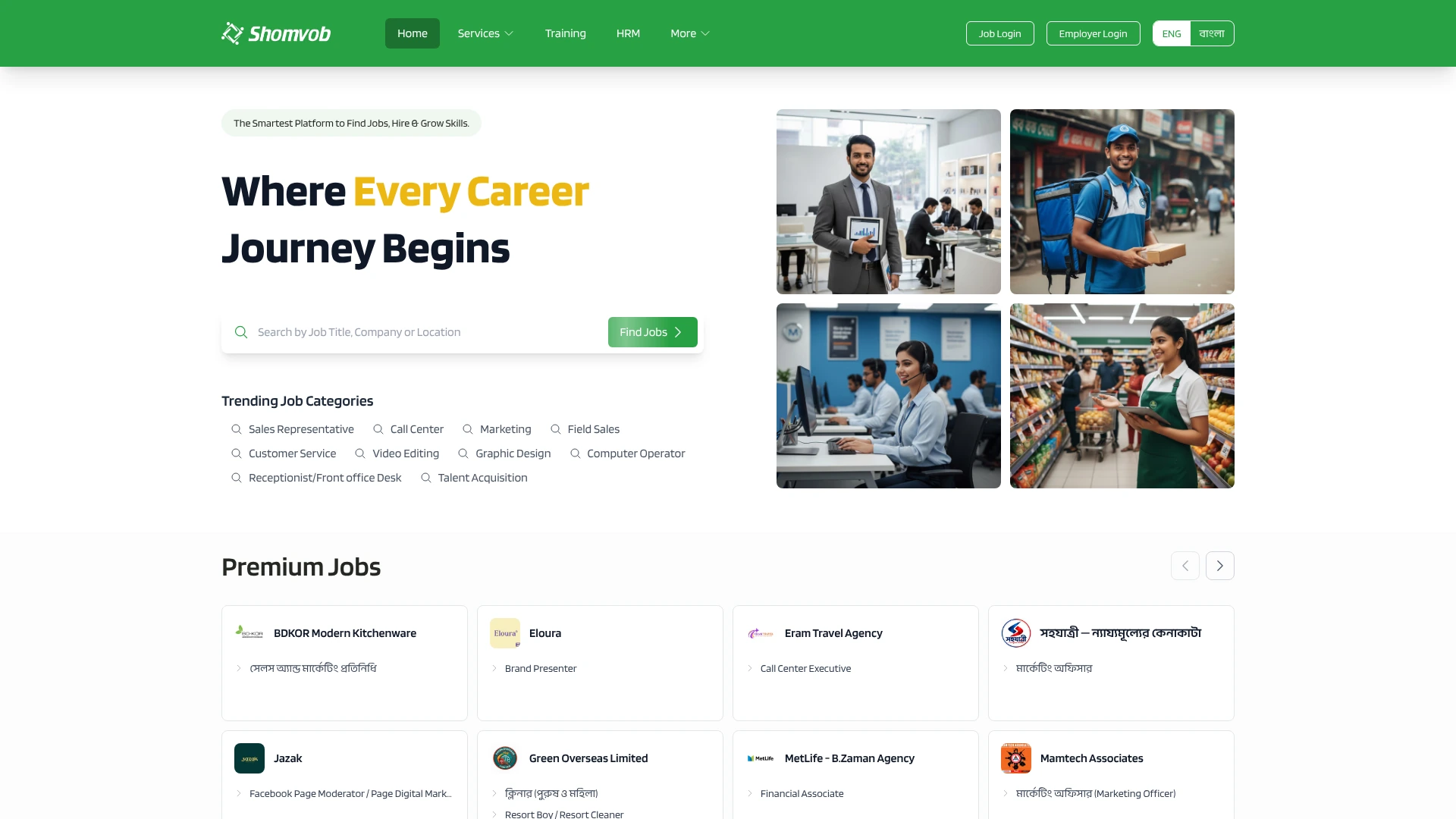
Shomvob HRM is an HR and payroll platform for Bangladeshi employers with mixed teams, from office staff to field crews. It sits next to Shomvob's hiring network, so hiring and payroll can share one employee record. Forbes Asia named Shomvob to its 2025 "100 to Watch" list, as Prothom Alo also reported.
Best for: Employers with office, field, and frontline staff, and teams that hire often.
Key features: Attendance and shift tracking with biometric device support, and a location view of field teams across 64 districts. Payroll runs cover statutory tax and deductions, payslips, compliance reports, and a one-click bank disbursement file. Earned wage access lets staff draw part of their earned pay before payday.
Hiring link: Prothom Alo reported in October 2025 that Shomvob has about 1.8 million registered job seekers and more than 2,000 client companies. Shomvob's recruitment tools include AI-assisted screening, interview scheduling, and online offer letters.
Pricing: No public price list. Prothom Alo reported payroll management at Tk 800 to 1,200 per employee, so ask for a current quote. A 30-day free trial gives access to all modules with no credit card.
Pros
Hiring, attendance, and payroll can share one employee record, so new-hire details don't get retyped.
Field teams are covered through location-based attendance and a district-level view.
Earned wage access gives frontline staff early access to pay already earned.
A free trial with all modules lets you test payroll on real figures.
Cons
Pricing is shared through a quote, so budgeting starts with a demo request.
Teams that only need a single attendance clock may find the full suite broader than their current need.
Employers that want one record from job post to payslip can see every module on the Shomvob HRM page.
Companies that would rather hand payroll over can use the staffing and payroll solution. It runs salary processing and tracks contracts against the Bangladesh Labour Act, AIT, and VAT rules.
Website: https://shomvob.com
PiHR
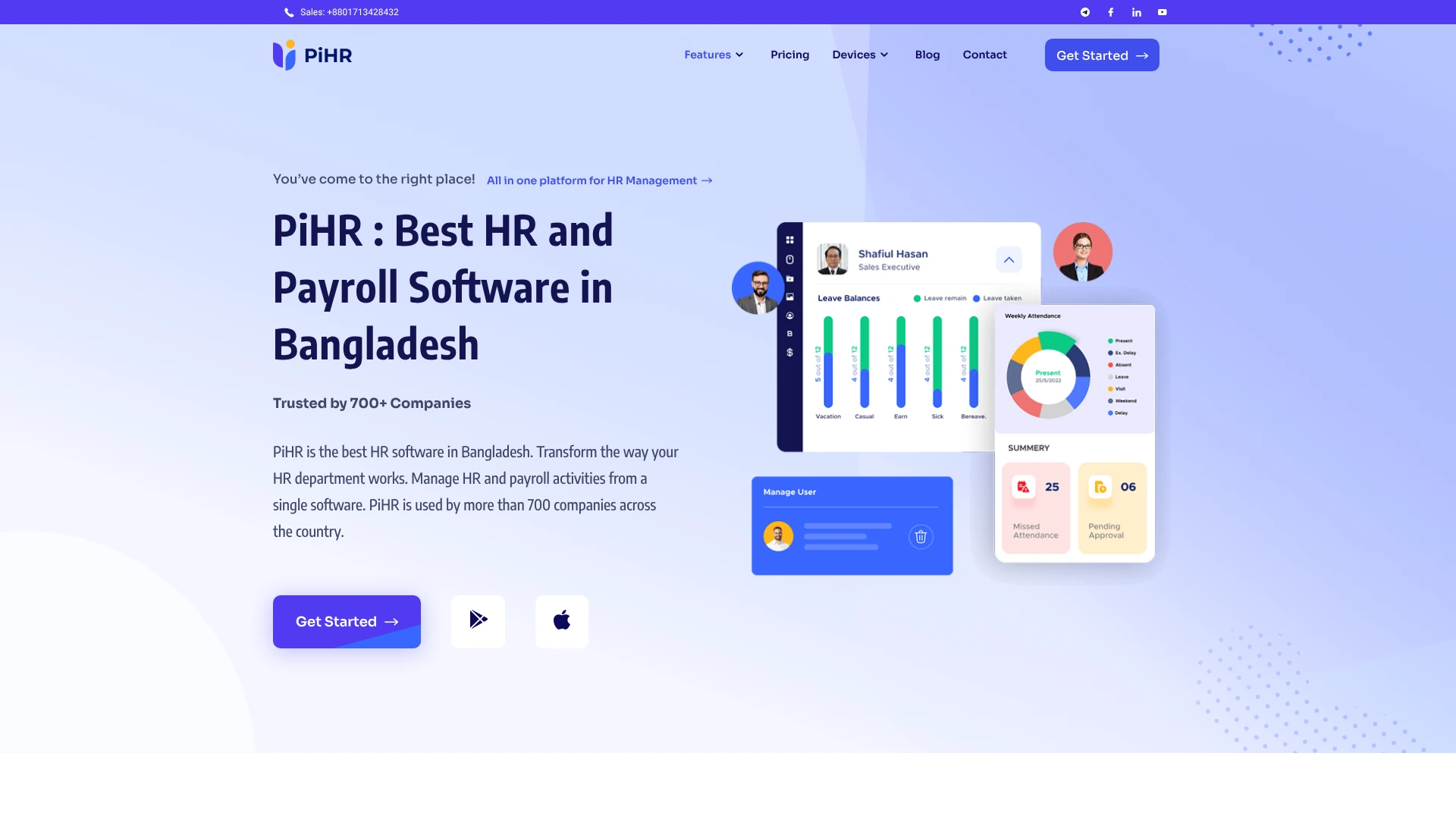
PiHR is a cloud HR and payroll product aimed at Bangladeshi businesses, and it appears in almost every local roundup.
Best for: Small and mid-size teams that want attendance, leave, and payroll in a mobile-ready package.
Key features: Real-time attendance that connects to biometric devices, with listings naming ZKTeco F18, K40, and F22 models. Payroll covers automatic tax calculation and loan management. Staff request leave on mobile or web, and the product also handles expense claims and shift rosters with overtime reports. Android and iOS apps are available.
Pricing: Reseller listings show ৳2,500 a month for 1 to 25 employees, ৳4,000 for 26 to 50, and ৳6,000 for 51 to 100, before VAT and tax. Larger teams get custom quotes.
Pros
Tiered monthly prices are visible through resellers, which makes small-team budgeting easier.
Biometric connection, leave, expense claims, and shift rosters sit in one product.
Android and iOS apps give staff mobile access to leave and attendance.
Cons
One aggregator notes limited customization for complex HR workflows.
No public API documentation was found, so test any integration needs before you sign.
Website: https://mypihr.com
Systech iHR
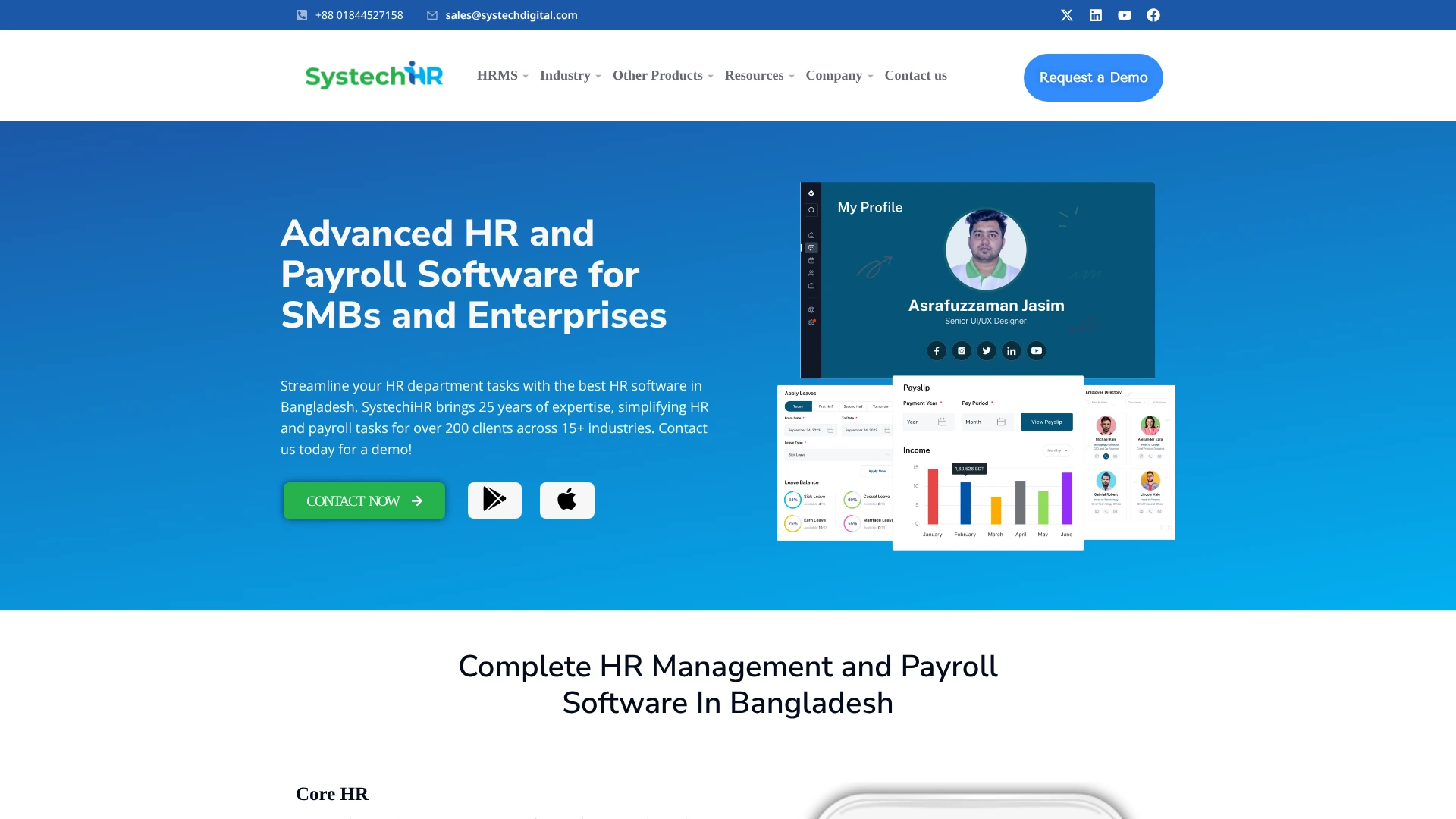
Systech iHR comes from Systech Digital Limited, a Dhaka-based software company. It builds HR systems for large organizations. Systech announced a cloud HRMS for the Bangladesh Red Crescent Society as part of its Digital BRCS initiative.
Best for: Large or multi-office organizations that need structured workflows and reporting.
Key features: Leave, attendance, training, and event management. The Systech iESS web and mobile apps let staff view payslips and salary information, apply for leave, and check in with location data.
Pricing: No public price list found.
Pros
The Bangladesh Red Crescent Society project shows it can serve a large national organization.
Staff self-service covers payslips, leave, and location-based check-in.
iBOS's roundup describes deep reporting and approval logs, though that is a competitor's description.
Cons
Public pages describe the self-service app in more detail than the payroll engine.
No price information is published, so small teams can't judge fit before a sales call.
The payroll module's scope is unclear, so ask for a demo with your own pay rules.
Website: https://systechihr.com
Jibika Plexus
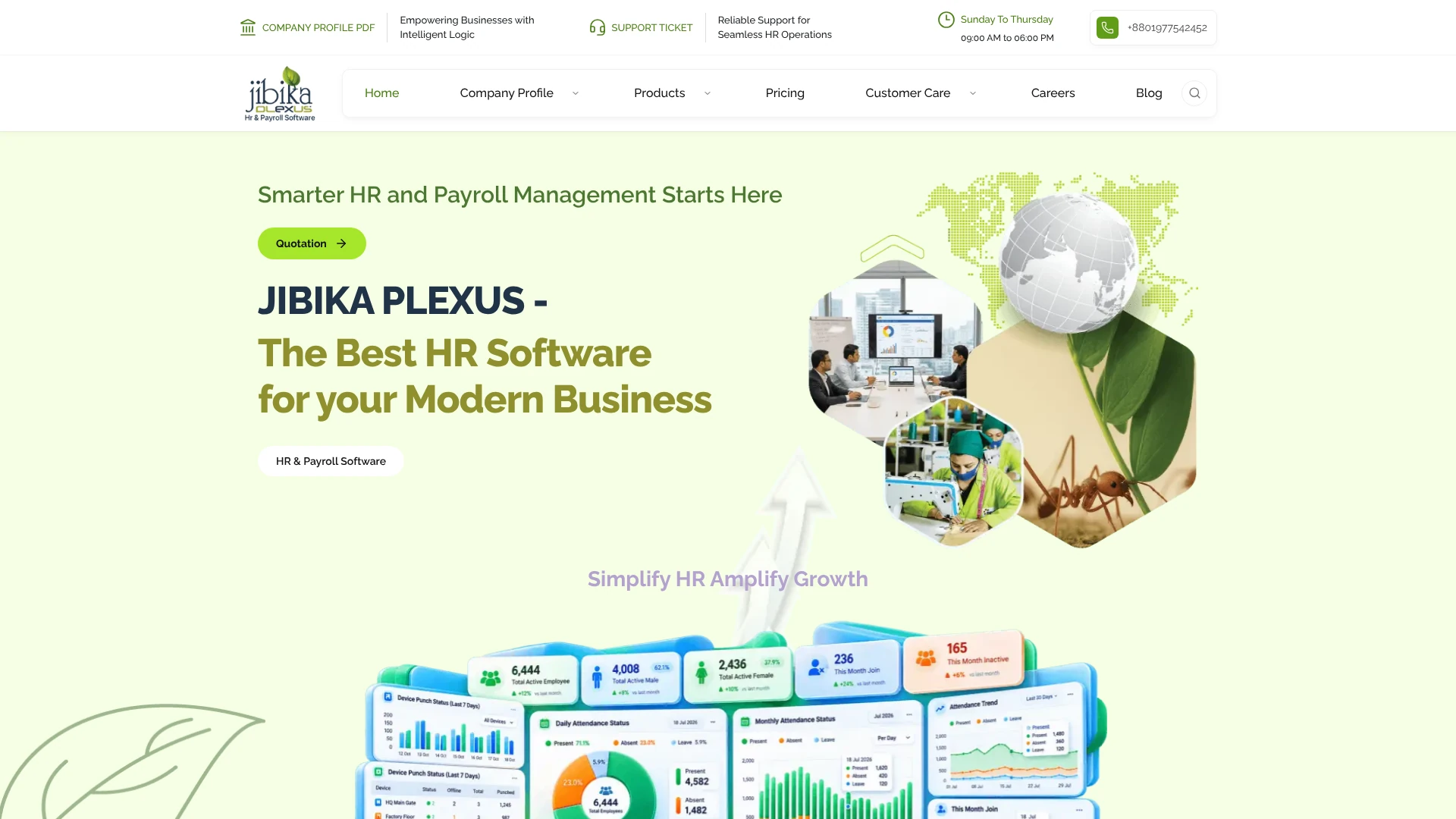
Jibika Plexus is built by Jibika Intelligic Limited. Several roundups describe it as a web-based HRIS with a compliance and data-security focus.
Best for: Factories, RMG units, and compliance-heavy organizations, as positioned in third-party roundups.
Key features: A mobile-responsive web app, multi-level online approvals, business-intelligence reports, earned-leave management, and compliance management. Roundups also mention encryption and automatic backups.
Pricing: Third-party comparison tables list plans from about ৳5,000 per month. Confirm with the vendor.
Pros
Multi-level approvals suit factories with several supervisors per shift.
Compliance management and earned-leave tracking are listed as core features.
Encryption and automatic backups are mentioned across roundups.
Cons
A vendor-written listing says about 200 companies use the product, and that figure is self-reported.
Pricing comes from third-party tables, so the ৳5,000 starting figure needs confirming.
Website: https://jibikaplexus.com
AccordHRM
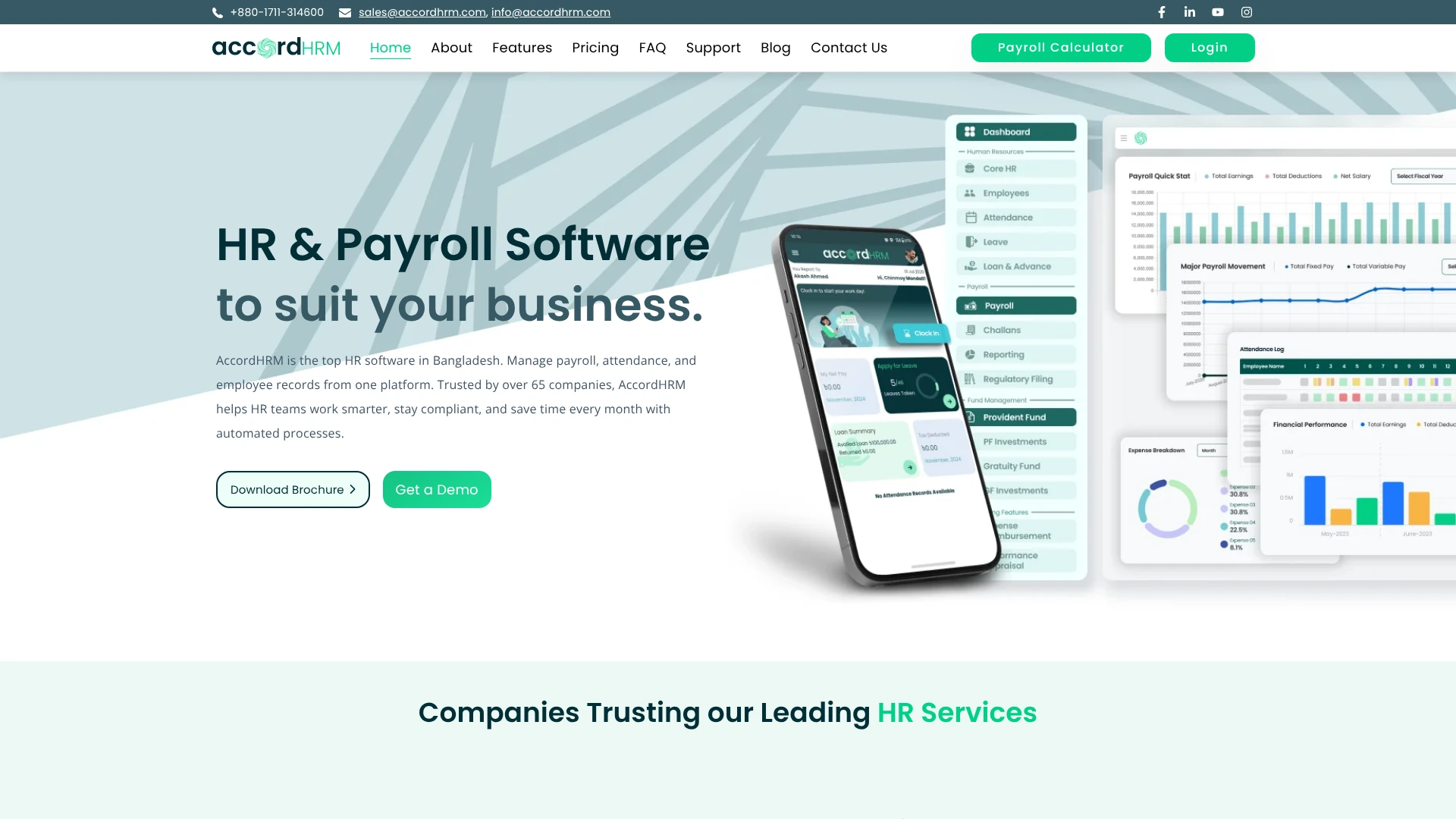
AccordHRM is a cloud HRMS from the ACE Advisory group. It has nine live modules, including loans and advances and a provident and gratuity fund module.
Best for: SMEs and mid-size firms that run provident or gratuity funds and want statutory filings handled inside the system.
Key features: Salary structures, tax calculation, multi-cycle pay runs with approvals, payslip email, and bank files. Compliance tools generate challans and statutory filings. Attendance can be GPS- or biometric-synced, and an employee app is on Google Play. Payroll outsourcing is available through ACE Advisory.
Pricing: No price figures on the homepage. A free trial and demo are offered.
Pros
It lists a dedicated provident and gratuity fund module.
Challans and statutory filings come out of the system.
A free trial and demo let you test before committing.
Payroll outsourcing is available if your team wants to hand the work over.
Cons
The site lists WPPF under upcoming features, while another section mentions managing it, so confirm WPPF status in a demo.
The vendor reports more than 65 clients and 22,000 payslips a month, and those figures are self-reported.
Website: https://accordhrm.com
Smart HRM
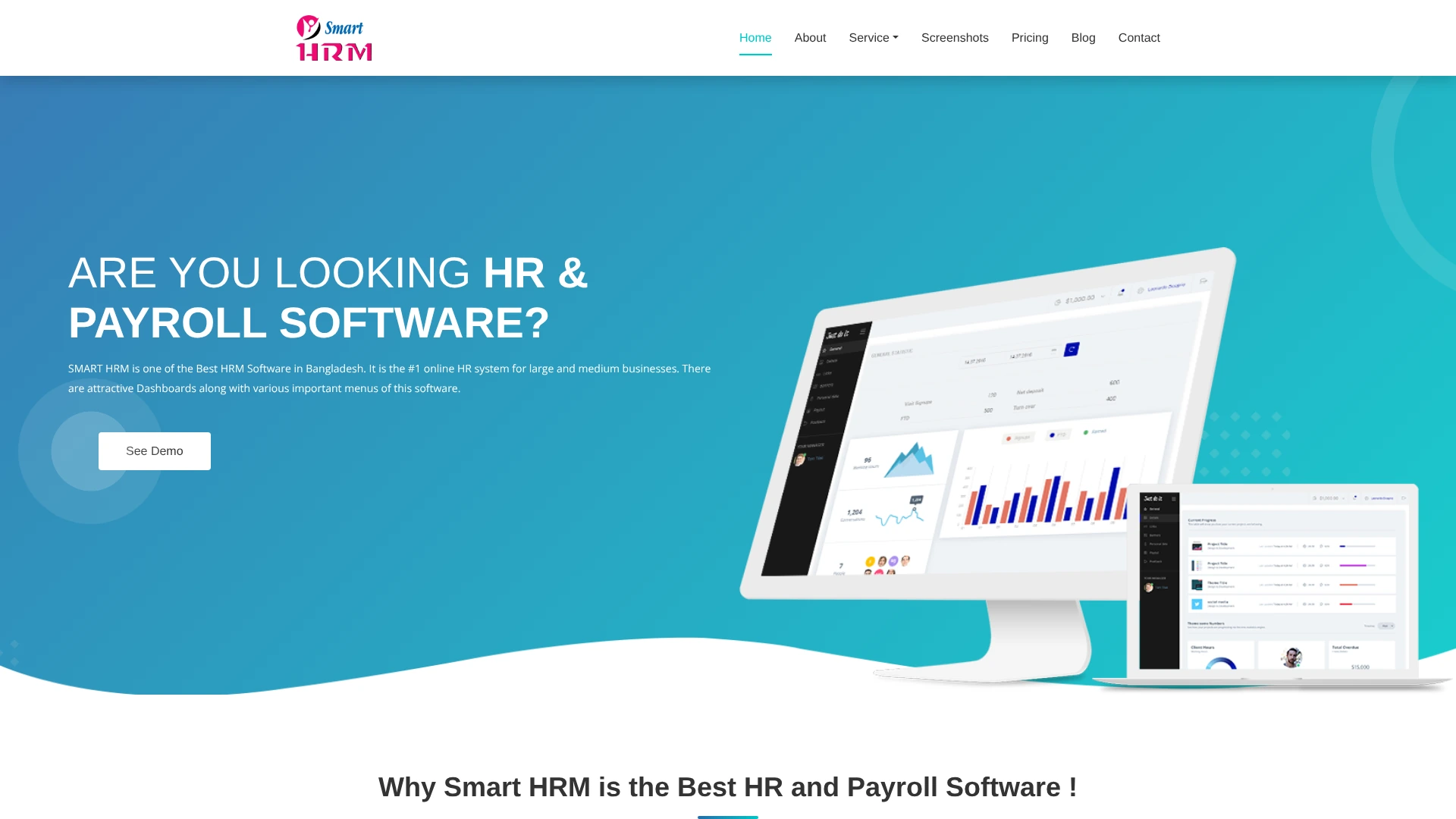
Smart HRM appears in most Bangladesh roundups as an option for garments, factories, and corporate teams. The details below come from third-party listings.
Best for: Garment, factory, and corporate teams, as positioned in roundups.
Key features: A third-party feature overview lists employee, holiday, leave, late, overtime, attendance, loan, payroll, recruitment, and training modules. Tipsoi's roundup mentions wireless biometric support and multi-shift payroll.
Pricing: One roundup lists ৳1,200 per month, while another calls pricing custom. Ask for a written quote.
Pros
Late, overtime, and multi-shift payroll features match factory attendance patterns.
Wireless biometric support is mentioned in one roundup.
A low starting price appears in one comparison table.
Cons
Sources disagree on pricing, so the real cost needs a written quote.
Feature details come from third-party listings, not from a vendor page.
Client references and overtime handling aren't verified here, so ask for references in your sector and a demo of your shift rules.
Website: https://hrmsoftwarebd.com
LinesPay
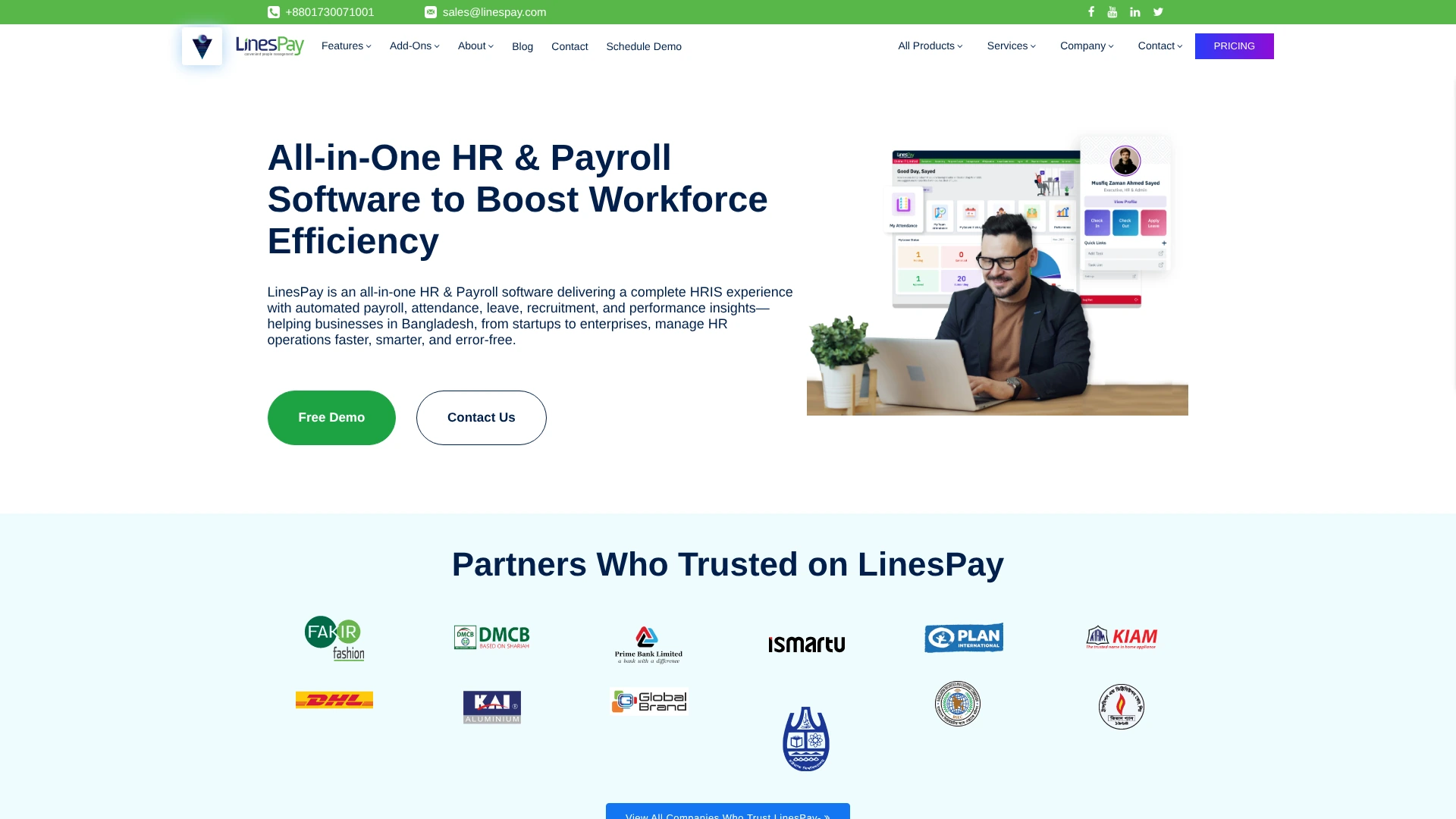
LinesPay is made by Divine IT Limited, a Bangladeshi software company founded in 2005. It covers HR and payroll for small and large employers.
Best for: SMEs to enterprises, including RMG employers.
Key features: Recruitment, attendance, leave, payroll, performance, training, and self-service modules, with tax calculation, payslips, shift management, and bonus handling listed on SoftwareSuggest. Divine IT's own PrismERP page also lists RMG compliance and disciplinary management for LinesPay.
Pricing: SoftwareSuggest lists a perpetual license from $1,500 for up to 500 employees.
Pros
One license covers up to 500 employees on the listing, which can work out cheaper over several years.
RMG compliance and disciplinary management are listed on the vendor's own page.
The product scales from small teams to enterprises.
Cons
A perpetual license swaps monthly fees for an upfront cost.
The dollar price comes from a listing site, not a local price page.
Website: https://linespay.com
GreenHR
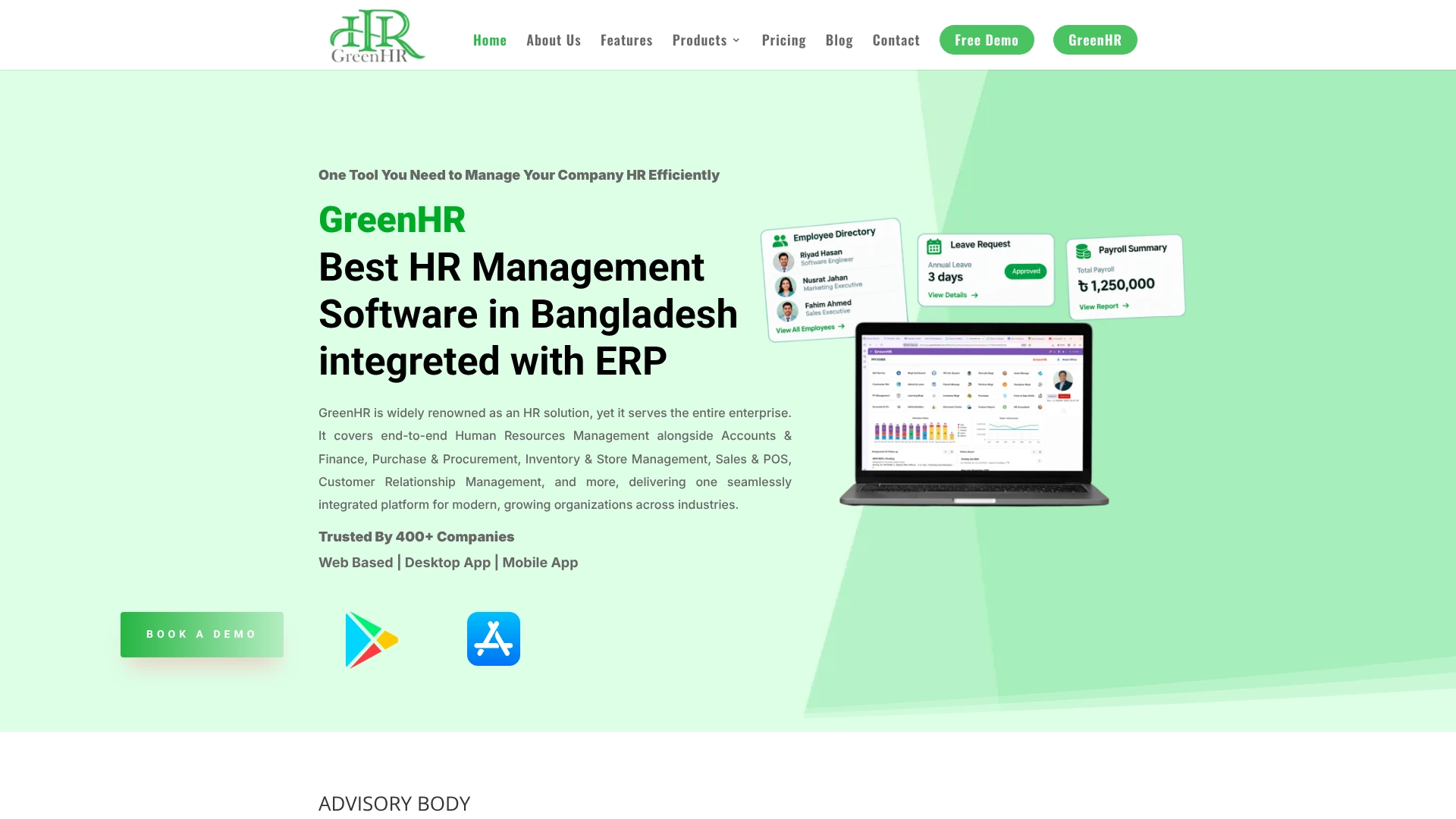
GreenHR is sold as a web, desktop, and mobile HR product. The same vendor lists accounting, procurement, inventory, and POS modules alongside it.
Best for: Teams that want an installed desktop version that works offline, or a cloud subscription, with the option to add other business modules later.
Key features: Recruitment, leave and attendance, time capture from biometric devices, performance, payroll, training, disciplinary records, self-service, and BI reports. The mobile app supports GPS-assisted attendance, and payroll can run across multiple companies.
Pricing: Not published. The site directs buyers to a "call for cost information" button.
Pros
An offline desktop option helps sites with weak internet.
Payroll can run across multiple companies, which suits groups with several entities.
Other business modules from the same vendor can be added later.
Cons
The page gives no detail on GPS accuracy or device requirements, so test location attendance at your own sites.
No price is published.
The vendor reports 400 or more companies, and that figure is self-reported.
Website: https://greenhrbd.com
PeopleDesk
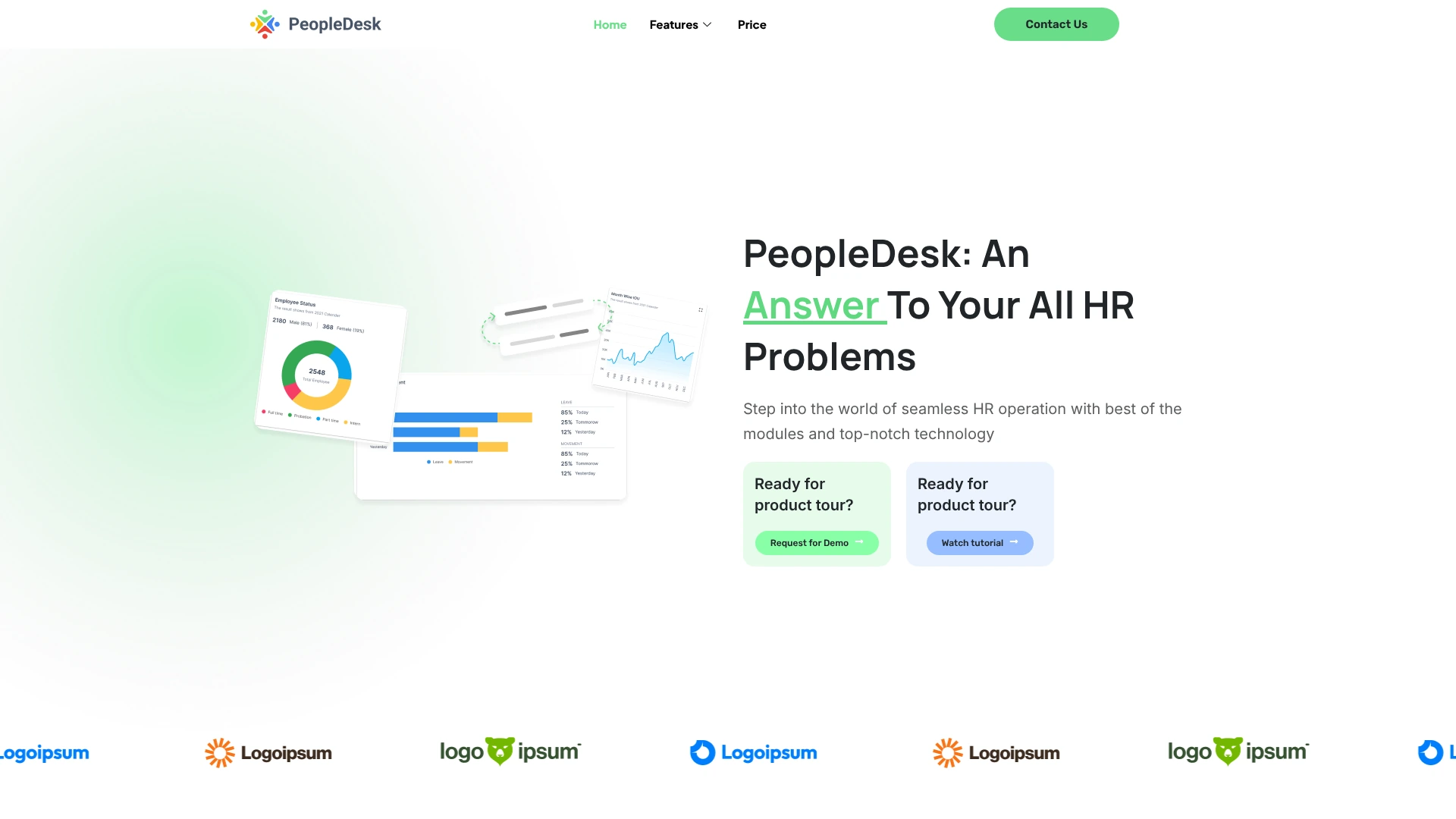
PeopleDesk is the HR and payroll product from AKIJ iBOS, the software arm of the Akij group. The Daily Star went live with phase one of PeopleDesk, which covers core HR data digitisation.
Best for: Mid-size to large corporates. iBOS pages list manufacturing, retail chains, garments, and logistics among its industries.
Key features: Recruitment and onboarding through retirement, attendance, leave, payroll, loans and advances, and performance on one panel. iBOS's own roundup says it integrates with biometric devices, supports mobile and GPS attendance, and handles bank and mobile-banking salary disbursement.
Pricing: Custom quotes. No official price list found.
Pros
It covers the full employee cycle from recruitment to retirement on one panel.
The Daily Star's phase-one rollout is a public reference.
Bank and mobile-banking salary disbursement are listed.
Cons
Most claims come from iBOS's own pages, so ask for a live demo with your payroll rules.
No official price list was found.
Website: https://peopledesk.io
PeoplesHR
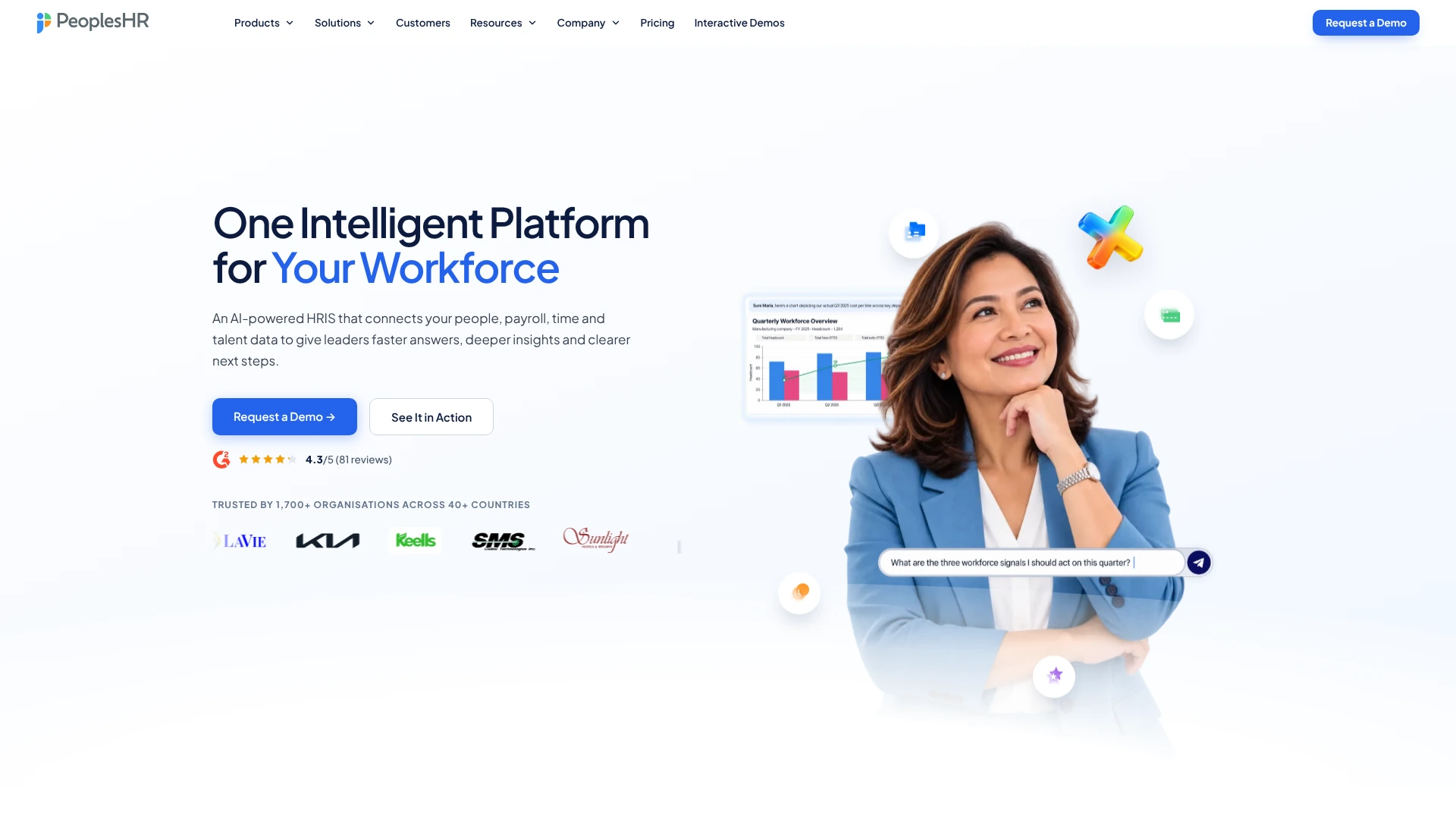
PeoplesHR markets an all-in-one HR system with a mobile app and analytics dashboards, and its site says it covers hire-to-retire processes.
Best for: Teams that want recruitment, payroll, and performance in one mobile-first product with analytics.
Key features: Recruitment, payroll, performance management, a mobile app, and analytics that include a happiness dashboard and predictive analytics, per its marketing page.
Pricing: Not published.
Pros
Analytics dashboards go beyond basic attendance and payroll reports.
A mobile app and hire-to-retire coverage sit in one product.
Cons
The page describes regulatory compliance in general terms, so ask for a demo of WPPF, provident fund, festival bonus, and tax at source.
No price is published.
Website: https://peopleshr.com
What HR Software Does in a Bangladeshi Business

HR software in Bangladesh stores employee records, tracks attendance, runs payroll, manages leave, and gives staff self-service on their phones. It replaces spreadsheets, paper files, and chat threads.
The payroll engine matters most. Pay depends on basic wage, overtime, festival bonuses, fund shares, and tax rules that changed in 2025 and 2026.
A full platform usually covers these jobs:
Employee records: Appointment letters, ID details, documents, and contract type.
Attendance and shifts: Biometric, mobile, GPS, or web check-in that feeds payroll directly.
Leave: Casual, sick, annual, maternity, and festival holiday balances.
Payroll: Salary structures, overtime, bonuses, loans, deductions, tax at source, payslips, and bank files.
Statutory funds: Provident fund, gratuity, and WPPF, depending on the employer.
Self-service and approvals: Staff see payslips and request leave from their phones, and managers approve in the system.
Payroll software calculates pay. HR software also holds people records and feeds payroll. Accounting software records the money after payroll runs.
How to Choose the Best HR Software in Bangladesh
Choose by testing five things: your workforce type, your pay rules, attendance fit, total cost, and vendor support. A platform that passes all five on your own data is the right one, whatever its feature list says.
Map your workforce. List monthly staff, daily-wage workers, shift workers, field teams, and contract staff. If you're still forecasting headcount, start with workforce planning, because headcount drives both price and setup effort.
List the rules you need tested. Collect your overtime policy, bonus rules, fund contributions, loan deductions, and tax handling. A platform that can't model them in a demo won't model them in month one.
Check attendance and mobile fit. Confirm which device brands connect, whether the system works offline, and whether staff can check in from phones. BTRC counted 120.84 million mobile internet subscribers out of 135.94 million in June 2026.
Compare total cost. Price the subscription or license, devices, installation, training, data migration, VAT, and yearly support.
Test support and exit. Ask who answers when payroll fails on the 28th, where your data is hosted, and how you can export it if you leave.
Questions to Ask in Every Demo

The best demo question is whether the vendor can run last month's payroll from your files and match your result to the taka. A scripted demo shows clean data. These questions show how the product behaves with your data and Bangladeshi rules.
Can you run last month's payroll from our files and match our result to the taka?
How is overtime calculated for a night shift that falls on a festival holiday?
Which wage components form the base for overtime, festival bonus, and fund contributions, and can we change that?
Which attendance devices connect today, and are we locked to one hardware brand?
Where do the 2026 changes appear: 120-day maternity leave, 13 festival holidays, and the new resignation and dismissal benefits?
When did the tax tables update for the Finance Act 2026, and who updates them?
Which of provident fund, gratuity, and WPPF are live rather than planned?
Where is employee data hosted, and what is logged when someone edits a salary?
How do we export all our data if we leave, and in what format?
What does the quoted price include, and what costs extra?
Can we speak to a client of similar size and industry?
What HR Software Costs in Bangladesh
HR software in Bangladesh costs about ৳1,000 to ৳6,000 a month for teams up to roughly 100 staff, while larger firms get custom quotes or buy perpetual licenses. Prices vary by model more than by brand. Three models dominate: a monthly plan by headcount tier, a per-employee monthly fee, and a one-time license with yearly support.
Monthly tiers for small teams: ৳1,000 to ৳6,000 per month for up to about 100 staff, from PiHR reseller listings and other third-party comparisons.
Per-employee pricing: ৳100 to ৳150 per employee per month is one benchmark, from IceHrm, a self-hosted vendor with a stake in the comparison.
Perpetual license: From $1,500 for up to 500 employees on one listing, with yearly support to confirm.
Attendance devices: Tipsoi's guides put basic fingerprint devices at ৳5,000 to ৳10,000 and face-recognition devices at ৳20,000 to ৳50,000 or more, plus installation.
At ৳100 to ৳150 per employee per month, a 300-person company would pay ৳30,000 to ৳45,000 a month. That's ৳360,000 to ৳540,000 a year, before devices and VAT. Compare that figure with a fee from payroll outsourcing companies, because software only removes the work if someone on your team runs it.
Labour Law and Tax Rules Your Payroll Software Must Handle in 2027
Your payroll software must handle the 2026 changes to overtime, leave, bonuses, end-of-service benefits, and tax at source. They come from the Labour (Amendment) Ordinance 2025, the Labour (Amendment) Act 2026, and the Finance Act 2026.
This list comes from published legal summaries, so treat it as general information and have an expert check it against the gazetted text. A specialist from one of the HR consultancy firms can review your pay rules first.
Overtime and wages: Overtime is paid at twice the ordinary rate, and wages are due before the seventh working day after the pay period (sections 100, 108, and 123).
Leave: Maternity leave is now 120 days, and paid festival holidays are 13 a year (sections 46 and 118).
Bonus and funds: Up to two festival bonuses a year, each capped at one month's basic wage, plus WPPF at 5 percent of net profit for qualifying companies.
End of service: Notice, compensation, and resignation benefits changed in 2026 (sections 26 and 27).
Tax and data: Individual tax was reset from 1 July 2026, and some personal data may need to stay in the country.
Get a written answer on the provident fund rule, final settlement timing, and the festival bonus service condition before you configure them, because sources still disagree on these.
Why Bangladeshi Employers Move Off Spreadsheets
Employers move off spreadsheets because software closes payroll faster, cuts errors, and applies rule changes in one place. About 84 percent of Bangladesh's 69.09 million employed people worked informally in 2024 (BBS Labour Force Survey), so formal employers carry most of the compliance load.
Faster, cleaner payroll: The same overtime and deduction rules run every month, so HR handles only exceptions.
Trusted attendance: Biometric, GPS, and mobile punches feed payroll directly.
Self-service and secure records: Staff view payslips on their phones, and edit logs protect salary data.
Hiring-to-payroll handoff: Employers that post roles through a job posting platform tied to their HR system keep one record from first contact to first payslip.
Setting Up HR Software Without Disrupting Payroll
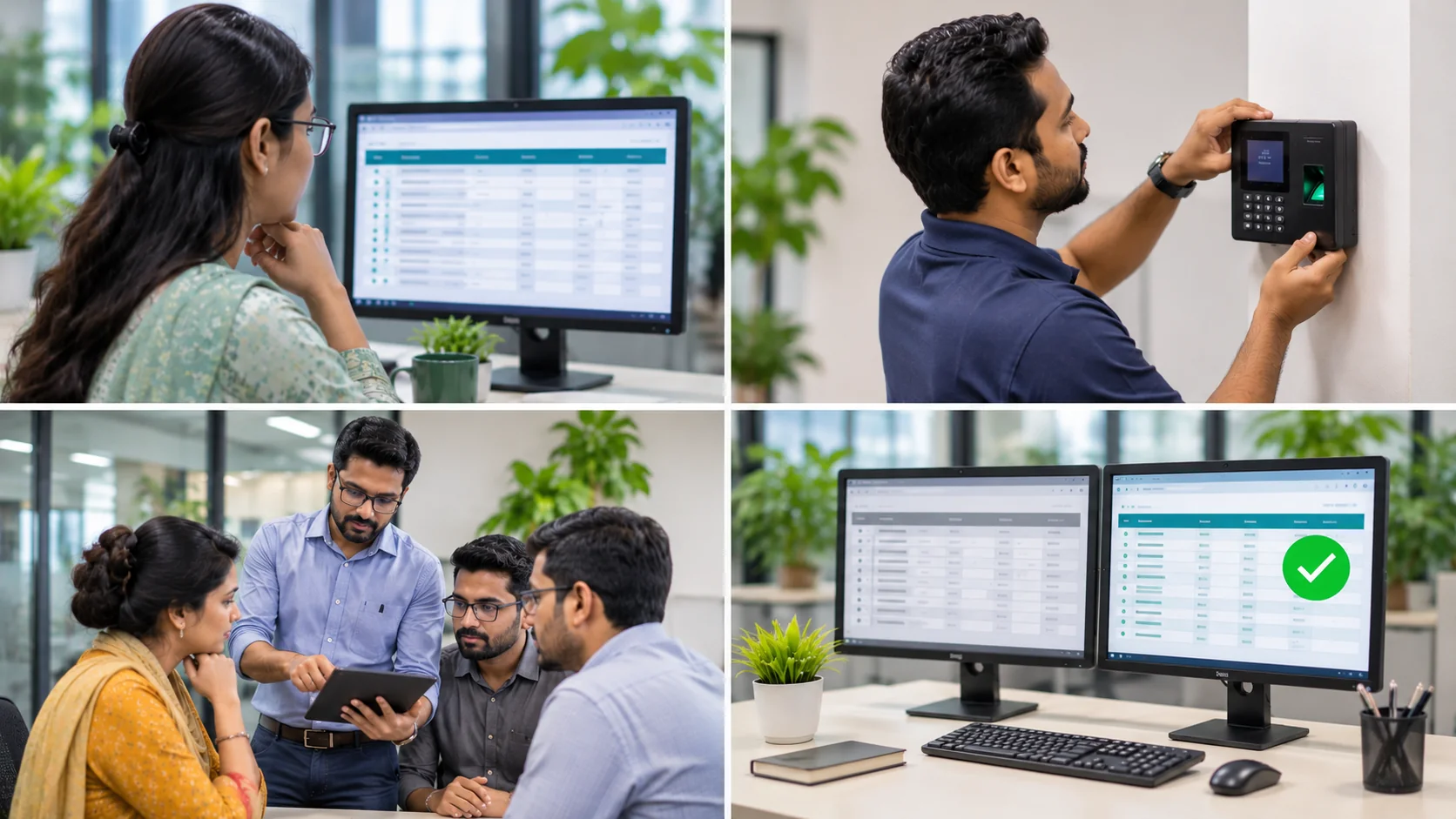
Setup works best in four phases: clean your data, configure rules and devices, train managers and staff, then run old and new systems side by side. Each phase protects the next payroll cycle.
Clean and move your data. Fix duplicate records, missing joining dates, and salary structures before import.
Configure rules and devices. Enter overtime, bonus, and fund rules, then connect attendance devices and test them.
Train managers and staff. Show managers how to approve leave and overtime, and run workforce training for HR staff if the team is new to the system.
Run old and new side by side. Compare both systems for at least one payroll cycle before you switch.
Limits of HR Software and When Outsourcing Payroll Fits
HR software works best when your policies are clear, and your team uses it daily. It falls short when rules are vague, or adoption is low, and outsourcing payroll can fill the gap. The two subsections below cover each case.
Where HR Software Falls Short
HR software falls short when policies are unclear, or data is bad, because it applies the rules you give it and produces wrong results faster. It can't settle a dispute between a manager and a worker, and it won't fix a leave policy that staff doesn't trust.
Adoption is the other limit. If managers approve requests by phone call instead of in the system, the records go stale, and HR ends up back in spreadsheets.
When Outsourcing Payroll Makes More Sense
Outsourcing payroll makes more sense when no one on your team can run payroll software, when headcount swings by season, or when compliance work outweighs your HR capacity. It moves routine processing to a provider, while in-house payroll keeps data and decisions close.
This comparison of HR outsourcing versus in-house models lays out the trade-offs.
Matching HR Software to Your Workforce, Rules, and Budget
Start with who you pay and how. Then test the rules that changed most in 2026, and compare cost over several years instead of the first month. A platform that passes those three tests will fit better than one with the longest feature list.
For Bangladeshi employers, the decision comes down to workforce fit, rule coverage, and total cost. Keep these points in mind:
Match the product to your workforce type, whether that's office staff, factory shifts, or field teams.
Make every vendor run your real payroll and attendance data, including overtime, bonuses, and fund deductions.
Ask which 2026 changes are live and which are planned.
Count devices, setup, training, VAT, and support on top of the monthly fee.
Get hosting, access, and data-export terms in writing.
Test Shomvob HRM With Your Own Payroll Data
Shomvob HRM offers a 30-day free trial with all modules and no credit card. You can run a payroll cycle on real figures before you commit. A specialist replies to demo requests within one business day, according to the product page.
Frequently Asked Questions About HR Software in Bangladesh
These answers cover the questions Bangladeshi employers ask most often before they choose a platform.
What Is the Best HR Software in Bangladesh?
The best HR software in Bangladesh is the one that runs your pay rules correctly, connects to your attendance devices, and fits your budget. No single product wins for every employer. The quickest way to find yours is to run last month's payroll through two or three shortlisted platforms.
What Is the Difference Between HR Software and Payroll Software?
Payroll software calculates salaries, deductions, and tax. HR software also holds employee records, attendance, leave, hiring, and appraisals, and feeds them into payroll. That's why most Bangladeshi vendors sell the two together as an HRMS or HRIS.
How Much Does HR Software Cost in Bangladesh?
Public prices for small teams run from about ৳1,000 to ৳6,000 per month for up to roughly 100 employees. Larger firms get custom quotes or buy perpetual licenses. Devices, installation, VAT, and training usually cost extra, so ask for a full written quote.
Which HR Software Suits Garment and Factory Workers?
Look for biometric device support, shift and overtime rules, and the reports buyers expect in audits. Several platforms position themselves for RMG and factories, so shortlist them and test overtime and festival-holiday scenarios with your own data.
Can Small Businesses Use HR Software?
Yes. Many vendors sell tiered monthly plans for teams under 100 people, and a small team gains most from automated attendance, leave, and payslips. Start with a short list of the rules you need, then check that the entry plan covers them.
Does HR Software Calculate Provident Fund, Gratuity, and Festival Bonus Automatically?
It can, if the vendor has configured the rules and you've entered your policies. Provident fund rules were still unsettled in published summaries after the 2026 amendment. Confirm the current rule and test the calculation before relying on it.
Will HR Software Cover the 2026 Labour Act Changes?
Only if the vendor has updated its rules. Test the 120-day maternity leave, 13 festival holidays, and the new resignation and dismissal benefits in a live demo.
How Long Does Setup Take?
Setup time depends on data quality, the number of sites, and how many devices must connect. Ask the vendor for a written plan with dates, and run old and new systems side by side for at least one payroll cycle before you switch.
Is Cloud HR Software Safe for Employee Data?
It can be. Look for encryption, role-based access, edit logs, and a clear answer on where your records are hosted. The Personal Data Protection Ordinance 2025 adds hosting rules for some data, so get those answers in writing.
Do I Need Biometric Devices to Use HR Software?
No. Mobile, GPS, and web check-in work for office and field teams, while factories and shift sites usually add devices for accuracy. Check device compatibility before you buy any hardware.