
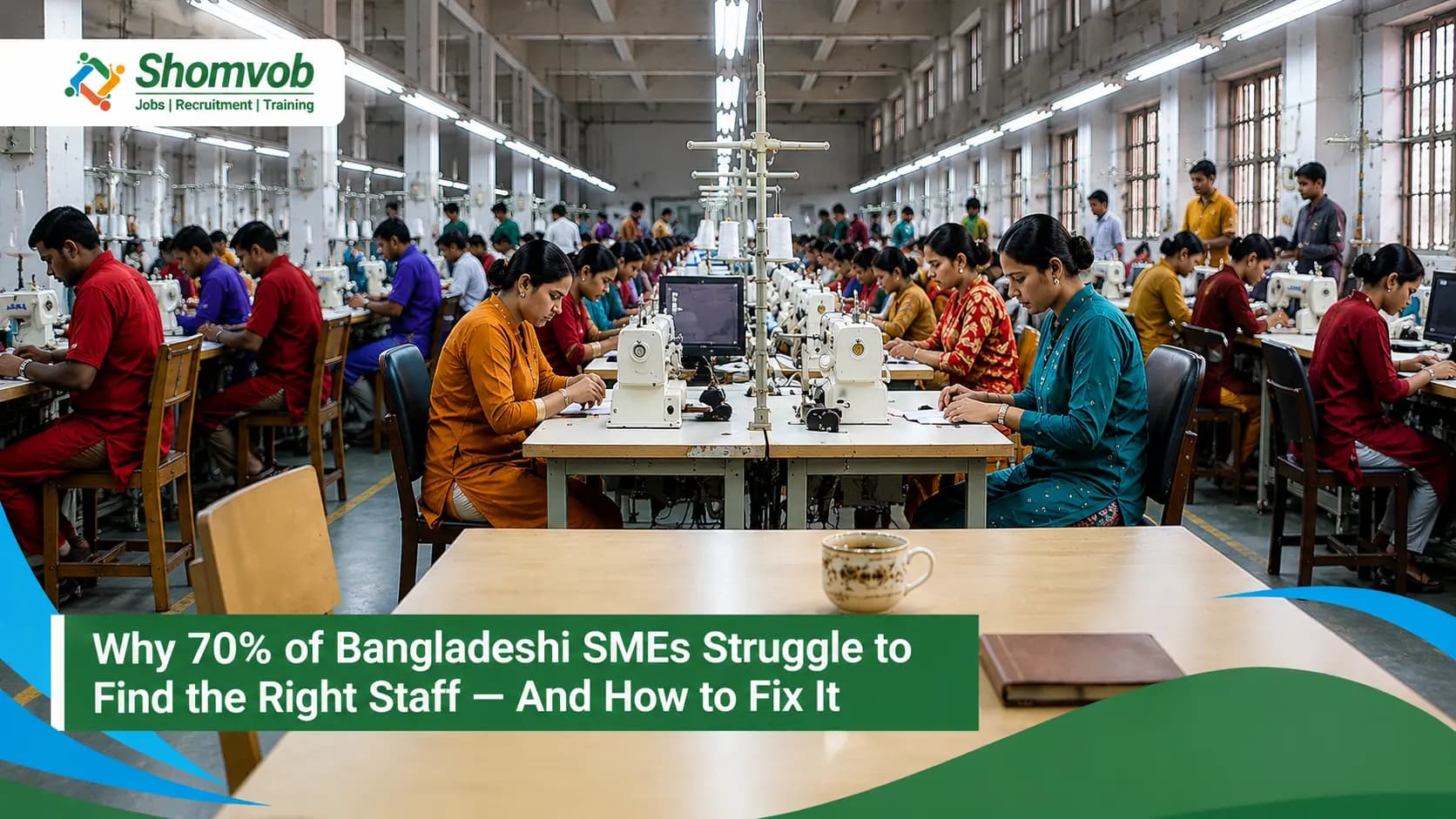
Many Bangladeshi SMEs struggle to hire the right people despite millions seeking jobs across the country. From informal recruitment and weak hiring processes to skill mismatches and high turnover, the hiring system is broken in critical ways. This article explores why SMEs face these challenges and shares practical strategies to attract, hire, and retain better talent.
Ask any small or medium-sized business owner in Bangladesh what keeps them up at night, and hiring will almost always be on the list.
Not because they are not trying. But because the system around hiring is broken in ways most people do not talk about openly. Businesses post vacancies and get flooded with irrelevant applications.
Or they post and hear nothing at all. When they do hire, the person leaves within three months. Then the cycle starts again.
This is not a problem unique to one industry. It cuts across garments, logistics, food and beverage, retail, construction, and services. Bangladesh has over 11.8 million cottage, micro, small, and medium enterprises as counted in the Economic Census 2024.
These businesses generate around 80% of jobs in the industrial sector and contribute roughly 25% to Bangladesh's GDP. Yet a huge portion of them cannot fill their vacancies with the right people. The talent is out there. The connection is failing.
This article will explain exactly why Bangladeshi SMEs struggle to hire effectively. It will also give you a clear, practical path to fix it.
The Scale of the Problem
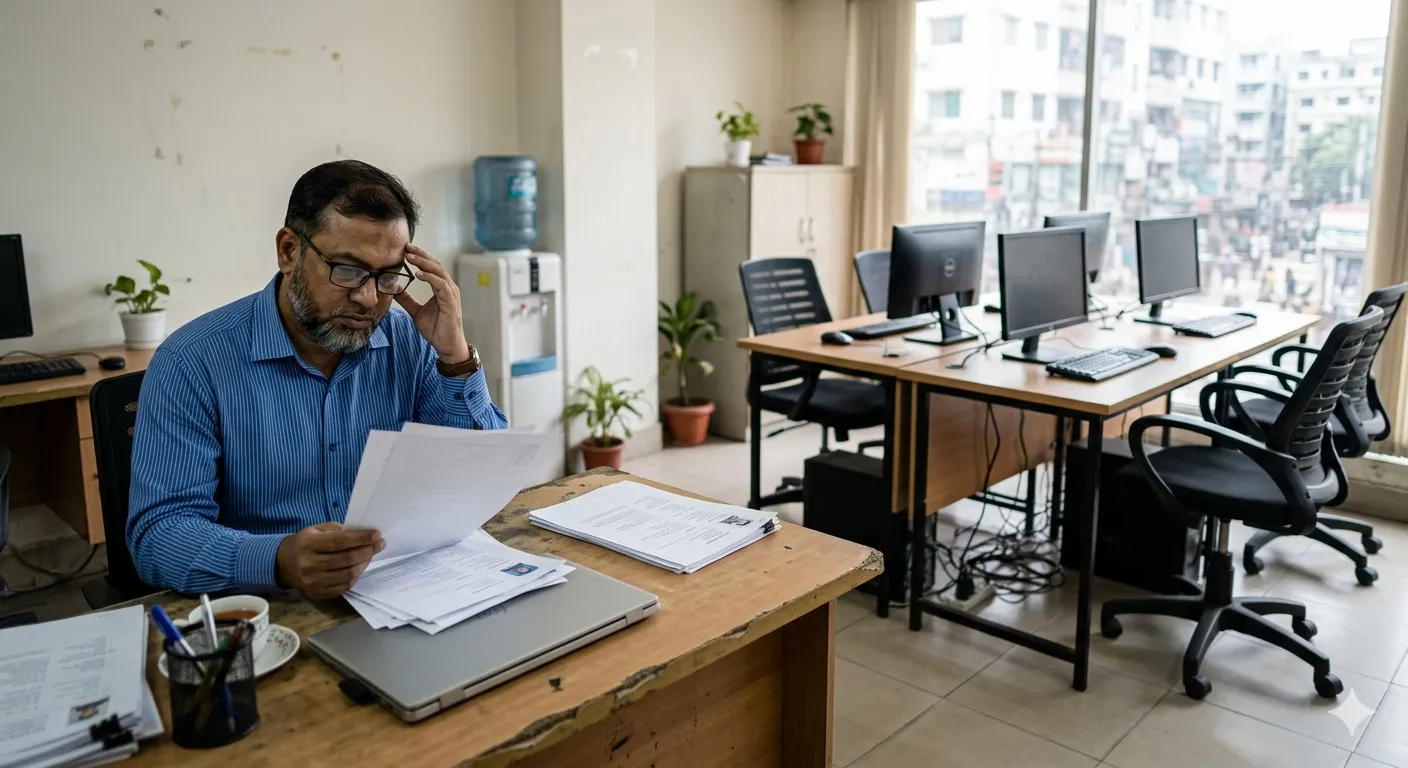
SMEs are the engine of Bangladesh's economy. You cannot overstate their importance. But their potential is being held back by one persistent bottleneck: the inability to attract, assess, and retain the right people.
What the Numbers Tell Us
CMSMEs make up 90% of industrial units and account for 80% of industrial employment in Bangladesh.
Yet the same sector is operating with serious structural weaknesses in how it hires. Around 700,000 businesses across Bangladesh are actively struggling to find the right employees.
At the same time, the Bangladesh Bureau of Statistics reported 2.66 million unemployed individuals in July–September 2024, a rise of 170,000 compared to the same period the year before.
Think about this. You have millions of unemployed people and hundreds of thousands of businesses that cannot fill their roles. That is not a supply problem. That is a mismatch problem.
The Skills Gap Is Real and Measurable
According to research by the Bangladesh Institute of Development Studies (BIDS), industrial sectors across Bangladesh are operating with a 30% skills gap.
This gap widens with the level of technological sophistication of the sector. The same study found that only 3.65% of the labor force in Bangladesh receives training each year.
You cannot hire skilled workers if the system that produces them is not generating enough of them.
Why SMEs Specifically Bear the Brunt
Large corporations have dedicated HR departments, employer branding budgets, and recruitment agencies on retainer. SMEs have none of that. They are competing for the same talent pool with fewer tools and less time.
Reason 1: Heavy Reliance on Informal Hiring
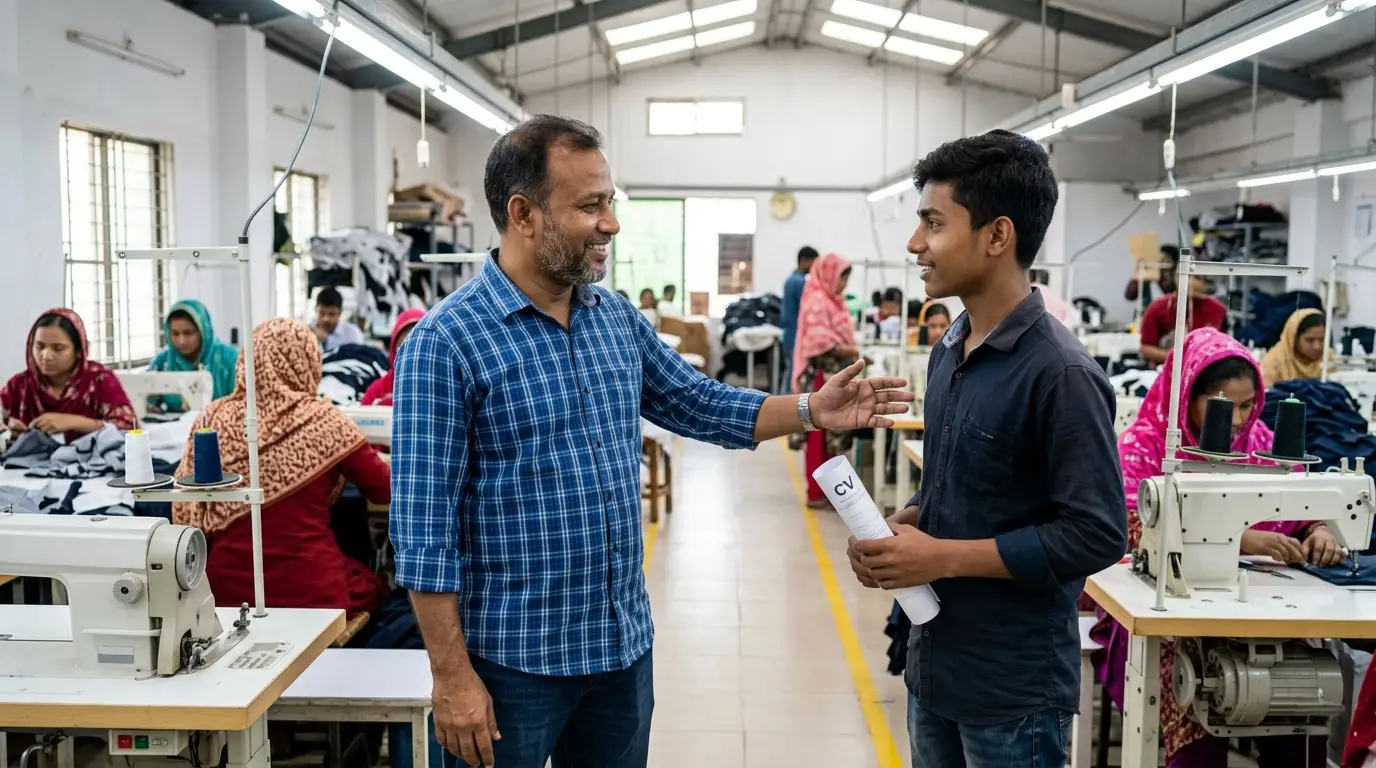
Most Bangladeshi SMEs still hire through word of mouth, personal referrals, or walk-in applications. This is not wrong on its own. But it limits the talent pool to whoever the owner or manager already knows. Research found that large organizations still conduct a significant portion of recruitment informally, via reference and personal sourcing. For SMEs, this reliance is even higher.
Informal hiring feels fast and safe. But it consistently produces smaller candidate pools, weaker skill matches, and higher turnover because candidates are selected on familiarity rather than fit.
Reason 2: No Structured Recruitment Process
Most SMEs do not have a documented hiring process. There is no standard job description format. There is no screening checklist. Interviews are often unstructured conversations. Hiring decisions are made on gut feel.
This creates inconsistency. Two managers in the same company can evaluate candidates using completely different criteria and reach completely different conclusions about the same person.
Without structure, every hire is a gamble.
Reason 3: Low Visibility as an Employer
Large companies are known. Fresh graduates and experienced workers know Walton, Square, PRAN, or Beximco. They do not know a mid-sized logistics firm in Narayanganj or a manufacturing unit in Gazipur.
SMEs struggle with employer visibility. When a candidate sees a job posted by an unfamiliar company, hesitation is natural.
Bangladesh's MSME sector provides employment to around 87% of the country's active labor force. Yet these employers are largely invisible in the formal hiring ecosystem.
Reason 4: Mismatch Between Vacancies and Available Skills
A survey of 27 leading companies found that 41% reported difficulty finding the skills they need. Only 37% of employers surveyed were satisfied with the performance of new recruits, which explains why 93% of them run in-house training programs to get new hires up to speed.
For SMEs, the cost of post-hire training hits harder than it does for large corporations. They do not have the budget or time.
Reason 5: High Turnover Drains Resources
You might be wondering how turnover connects to hiring difficulty. They are directly linked. When retention is low, SMEs are constantly rehiring. Every replacement hire costs time, money, and focus.
Estimates from HR practitioners across South Asia suggest that replacing a blue-collar worker costs between one and three months of their salary when you factor in lost productivity, training, and the hiring process itself.
High turnover is often a symptom of poor hiring. When the wrong person is placed in a role, they either leave on their own or need to be let go. The fix starts at the point of hire.
Reason 6: Limited Use of Technology in Hiring
Bangladesh had 77 million internet users as of 2024, and mobile penetration is strong even in rural areas. Yet a large portion of SME hiring still happens entirely offline. Paper CVs, phone calls, and walk-ins remain the dominant tools for many businesses outside major cities.
In more digitally advanced markets like Malaysia and Indonesia, leading job portals derive over half their business from the SME segment. In Bangladesh, that shift is only just beginning.
The Candidate Side of the Problem
Fixing SME hiring requires understanding both sides. The problem is not only with how businesses hire. It is also about how job seekers navigate the market.
Graduates Are Overqualified on Paper, Underprepared in Practice
Youth unemployment among those with tertiary education stands at 27.8%, with the figure rising to 32.6% for women, according to the ILO. A significant 22% of young people aged 15 to 29 are not in education, employment, or training (NEET).
Graduates enter the market with degrees but without practical skills. SMEs need people who can do the job from day one, not people who need six months of on-the-job training.
Blue-Collar and Silver-Collar Workers Lack Formal Channels
The majority of SME hiring needs fall into the blue-collar and silver-collar categories. These are production workers, delivery staff, machine operators, supervisors, technicians, and skilled tradespeople.
These candidates rarely have polished CVs or LinkedIn profiles. They find jobs through community networks, middlemen, or direct walk-ins.
There has historically been no structured digital channel to connect this workforce with the businesses that need them.
Geographic Barriers Limit Reach
Many SMEs are located outside Dhaka and Chattogram. Workers in smaller towns and rural areas have even fewer formal channels to find opportunities. A
nd SMEs in those areas cannot easily attract urban talent either. The geographic mismatch adds another layer to an already complex problem.
The Real Cost of Getting Hiring Wrong
Poor hiring is not just an inconvenience. It has a direct financial impact on your business.
Cost Category | Estimated Impact |
Time to fill a vacancy | 2 to 6 weeks of lost productivity |
Training a wrong hire | 1 to 3 months of salary |
Turnover rate impact | Up to 30% productivity loss per unfilled role |
Management time on rehiring | 15 to 20% of a manager's monthly hours |
Damage to team morale | Difficult to quantify but consistently reported |
Workforce mismatches cut productivity by up to 30%. When you multiply that across a team of 50 or 100 workers, the impact on your bottom line is significant.
How to Fix It: A Practical Approach for Bangladeshi SMEs

Have you thought about what a structured hiring process would actually look like for your business? It does not need to be complex. It needs to be consistent.
Step 1: Write a Proper Job Description
Most SME job postings in Bangladesh are vague. "Experienced person needed for marketing" tells candidates nothing useful. A proper job description includes the role title, key responsibilities, required skills, working hours, location, and salary range.
Salary transparency matters more than many employers realize. Candidates filter out roles that do not show compensation. Publishing a range reduces wasted time for both sides.
Step 2: Use Digital Hiring Platforms
The shift to online hiring is no longer optional. It is the most cost-effective way to reach a large, qualified candidate pool quickly. Platforms built for Bangladesh's blue-collar and silver-collar market have changed what is possible for SMEs.
Shomvob, for example, has processed over 6 million job applications and maintains a database of 1.8 million registered job seekers, including 300,000 monthly active candidates.
For SMEs hiring at scale, access to a ready candidate pipeline like this removes one of the biggest hiring bottlenecks.
Step 3: Screen Based on Skills, Not Just Credentials
A candidate with an SSC certificate who has three years of relevant experience is often more valuable than a fresh graduate with a degree. Yet many SMEs filter on credentials by default.
Define the two or three skills that matter most for the role. Screen for those. A short practical test or a structured conversation around real scenarios tells you more about a candidate than a CV ever will.
Step 4: Standardize Your Interview Process
Use the same set of core questions for every candidate applying for the same role. This allows fair comparison. Without consistency, you are comparing apples to oranges and making decisions based on who happened to interview on a good day.
Keep interviews focused and time-bound. A 30-minute structured interview with clear evaluation criteria outperforms a 90-minute informal conversation every time.
Step 5: Move Quickly
Good candidates do not wait. In Bangladesh's informal hiring market, a blue-collar or silver-collar worker will often accept the first reasonable offer they receive. If your process takes three weeks, you will lose candidates to faster employers.
Aim to move from application to offer within five to seven working days for non-executive roles. Build your process around that timeline.
Step 6: Build a Talent Pipeline, Not Just Fill Vacancies
Most SMEs hire reactively. A worker quits on a Friday, and the search starts on a Monday. Proactive businesses maintain a live pipeline of candidates for their most commonly hired roles.
Keep a shortlist of candidates who were strong but not hired last time. Store their contact details. Reach out when the next vacancy opens. This alone can cut your time-to-hire in half.
Step 7: Improve Onboarding to Reduce Early Turnover
A significant proportion of new hire departures in SMEs happen within the first 90 days. This is almost always an onboarding failure.
New workers who do not receive clear direction, a proper introduction to their team, and basic training in their first two weeks are far more likely to leave.
An onboarding checklist costs nothing. It dramatically improves retention.
Hiring Checklist for Bangladeshi SMEs
Use this before and during every recruitment cycle.
Before You Post
Define the role clearly with responsibilities and required skills
Set a realistic salary range based on market rates
Identify the two or three non-negotiable skills for the role
Decide your target hire date and work backward to set deadlines
During Recruitment
Post on at least one digital hiring platform
Screen CVs within 48 hours of receipt
Use a consistent set of interview questions for all candidates
Test practical skills where applicable
After the Offer
Issue a written offer or contract before the start date
Prepare a first-week plan before the candidate arrives
Assign a buddy or supervisor responsible for onboarding
Check in formally at the end of the first month
Conclusion
Bangladesh's SMEs are too important to the economy to keep losing ground to a fixable problem. The talent is in the market. The technology to connect businesses with that talent is available. What most SMEs need is a combination of process discipline and the right digital tools.
Hiring the right person the first time saves money, reduces disruption, and builds the kind of stable team that can actually grow a business. You do not need a large HR department to get this right. You need a clear process, a reliable platform, and the commitment to follow it consistently.
Start with one change this week. Write a proper job description for your next vacancy. Then get it in front of a digital candidate pool that is actually looking for what you offer.
Frequently Asked Questions
1. Why do so many Bangladeshi SMEs rely on informal hiring?
Informal hiring through referrals and personal networks feels faster and lower risk. But it consistently limits the talent pool and leads to weaker skill matches. Digital platforms now offer equally fast options with far better reach.
2. What is a skills mismatch, and why does it hurt SMEs more than large companies?
A skills mismatch happens when the skills a worker has do not match what the job requires. Large companies can absorb the cost of training. SMEs often cannot. The result is lower productivity, frustration on both sides, and early turnover.
3. How much does a bad hire actually cost a small business?
Estimates across South Asia suggest that replacing a blue-collar or entry-level worker costs between one to three months of their salary when lost productivity, training, and rehiring time are factored in. For an SME with thin margins, that is significant.
4. Is digital hiring realistic for businesses outside Dhaka?
Yes. Mobile internet penetration across Bangladesh means candidates in smaller cities and rural areas are increasingly reachable through digital platforms. Job seekers in these areas actively use apps to find work.
5. How can an SME compete with larger companies for the same talent?
Clarity and speed help more than brand recognition. A clear job description, a fast process, and a fair offer will beat a slow, vague corporate process most of the time. Culture and proximity to home also matter to candidates.
6. What should be in a basic job description for a blue-collar role?
Include the job title, main tasks, physical requirements, if any, working hours, location, salary or daily rate, and how to apply. Simple and clear always outperforms detailed and confusing.
7. How do hiring platforms designed for blue-collar workers differ from general job sites?
Blue-collar focused platforms are built around mobile access, simplified applications, and vernacular language support. They also tend to have pre-screened candidate pools that match the kinds of roles SMEs typically hire for.
8. What is the biggest mistake SMEs make during interviews?
Using unstructured, inconsistent interviews. Asking different questions to different candidates makes a fair comparison impossible. A short, standardized set of role-specific questions solves this.
9. How long should the hiring process take for an SME?
For non-executive roles, five to seven working days from posting to offer is achievable and advisable. Longer than two weeks and you risk losing strong candidates to faster competitors.
10. How does Shomvob help SMEs with hiring in Bangladesh?
Shomvob connects businesses with a database of 1.8 million registered job seekers and 300,000 monthly active candidates, with a focus on blue-collar and silver-collar workers.
With over 6 million applications processed and 30,000 jobs secured through the platform, it provides SMEs with a ready, verified talent pipeline without the cost of traditional recruitment agencies.