
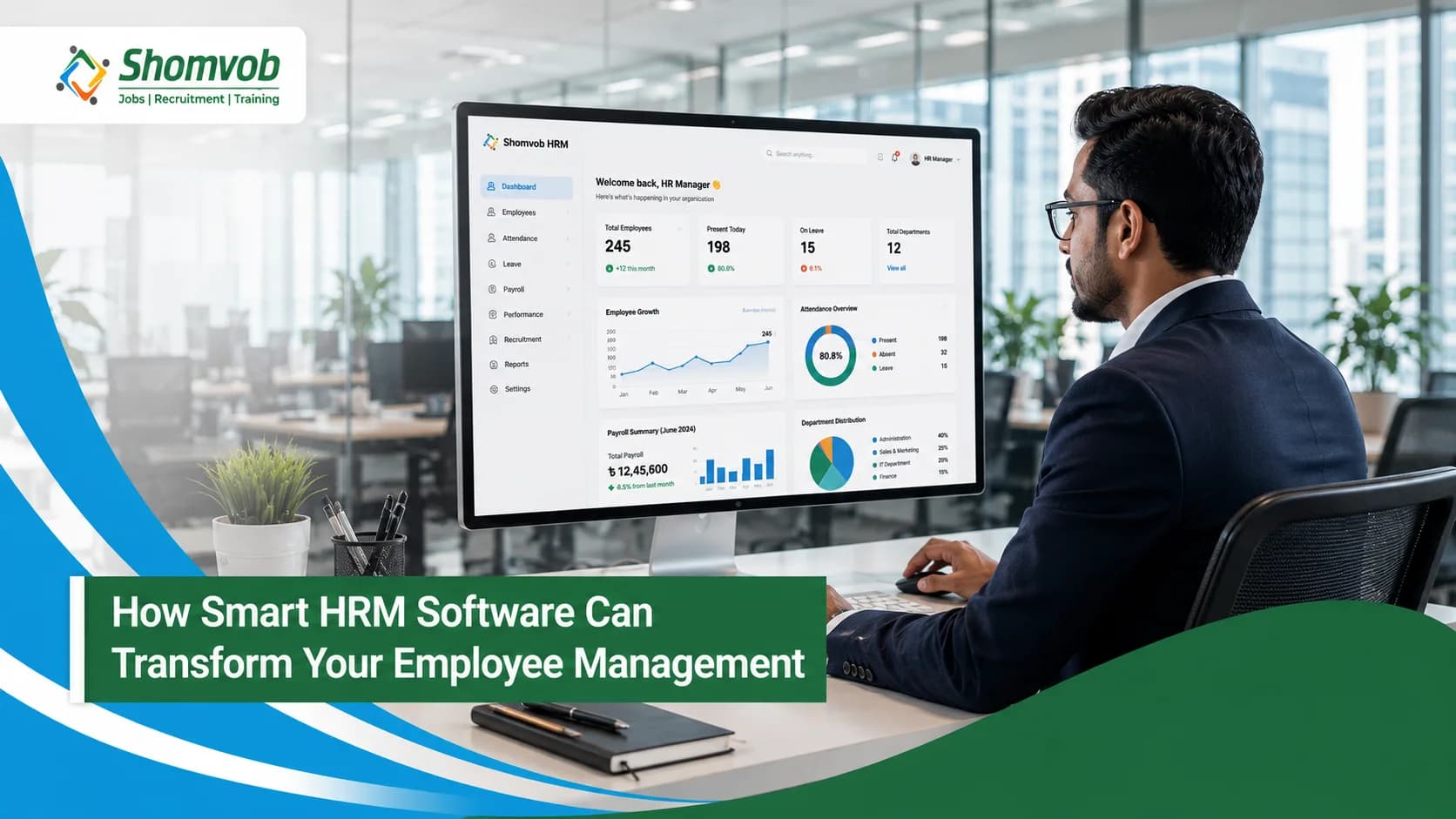
HRM software transforms employee management by automating payroll, attendance, leave, compliance, and performance tracking. Discover how smart HR solutions help businesses improve efficiency, reduce administrative work, and support sustainable growth.
Managing people used to mean spreadsheets, paper files, and a lot of guesswork. Anyone who has sat through enough manual payroll cycles knows how much time is lost on tasks that should take minutes, not days.
Smart HRM software changes that picture entirely, and the data backs this up.
The global HR software market is valued at roughly USD 19.57 billion in 2026 and is expected to climb to USD 31.89 billion by 2031, growing at a CAGR of 10.29%. That growth is not a coincidence.
Businesses, including a growing number in Bangladesh, are realizing that smart HR software saves time, reduces errors, and improves the employee experience.
Let's break it down section by section, starting with what HRM software actually does.
What Is Smart HRM Software
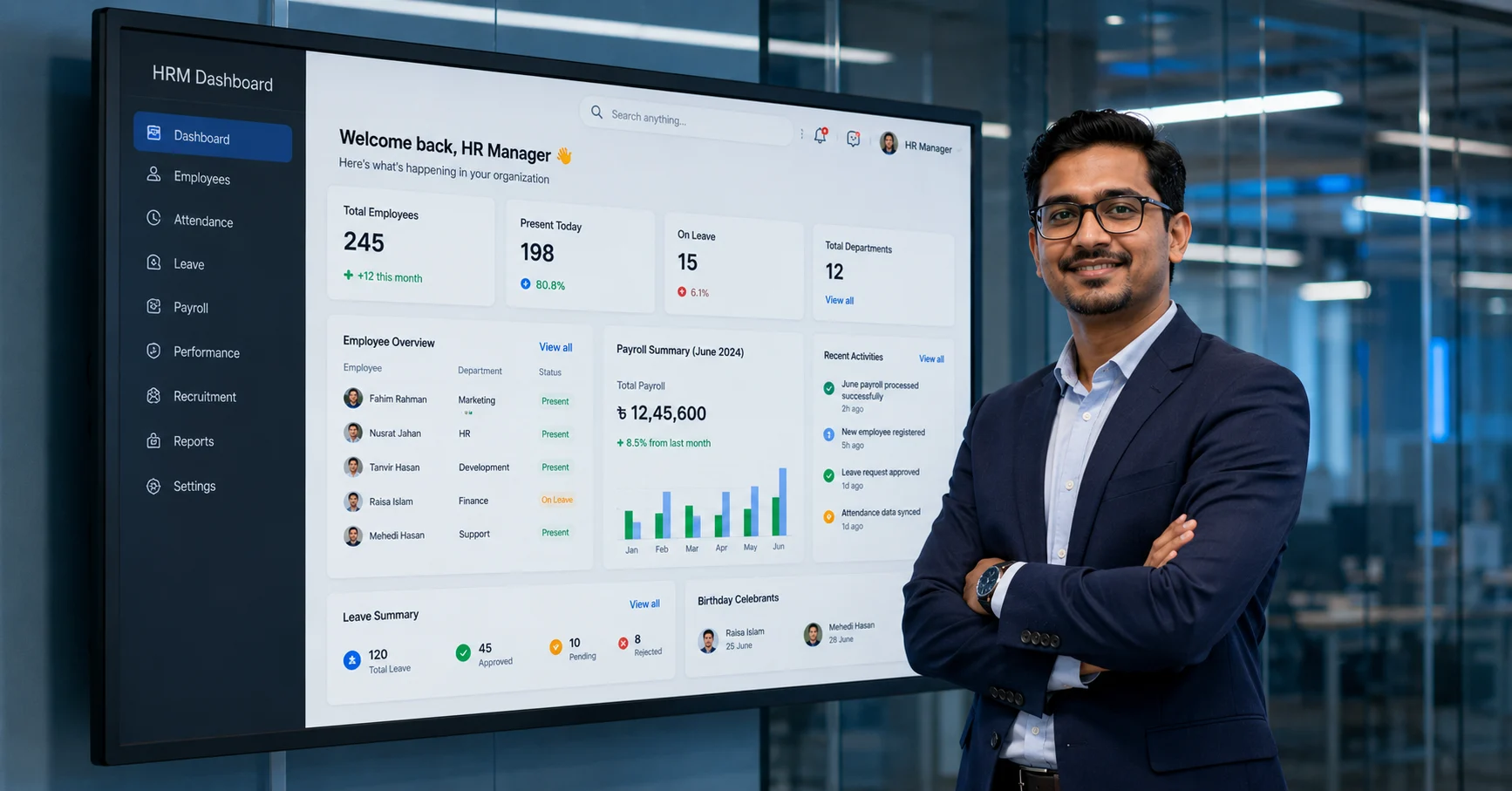
Smart HRM software is a digital platform that automates and centralizes human resource functions. Think payroll, attendance, recruitment, performance reviews, and employee records, all in one place instead of scattered across files and folders.
Core Functions of HRM Platforms
A typical HRM system handles several connected functions rather than operating as a single tool.
Payroll management and tax compliance
Employee data and document management
Attendance and leave management
Recruitment and onboarding
Performance management and reviews
Learning and training modules
Why "Smart" Matters Here
The word "smart" usually points to AI and automation layered on top of traditional HR software.
AI and Machine Learning algorithms are now embedded in 48% of top HRM tools, enhancing recruitment accuracy and predictive analytics. That is nearly half the leading platforms on the market today.
You might be wondering how this is different from the HR software companies used a decade ago.
The honest answer is that older systems mostly digitized paperwork. Smart HRM software actually analyzes patterns, predicts problems, and recommends actions.
The Real Cost of Manual HR Processes

Before talking about benefits, it helps to understand what businesses are dealing with right now without automation in place.
Manual HR work is not just slow; it is risky. Errors in payroll management, missed compliance deadlines, and lost employee records can cost your company far more than the price of good software.
Time Lost on Repetitive Tasks
HR teams working without automation spend a large share of their week on administrative tasks rather than strategic work. Automated leave, payslip, and benefits portals can reduce HR administrative workload by 30-40% across organizations with over 500 employees.
That is a meaningful piece of time redirected toward hiring, culture, and retention work instead.
Compliance Risk Without Automation
You know that regulatory requirements change often, and tracking them manually across jurisdictions is genuinely difficult. Demand also rises as governments digitize tax administration and impose real-time payroll reporting, intensifying the need for automated compliance engines.
Companies without smart systems often discover compliance gaps only after receiving a penalty notice.
How Smart HRM Software Transforms Employee Management
Now let's focus on the actual transformation, not just the marketing language vendors use.
Faster Onboarding and Documentation
Cloud-based HRM platforms significantly cut onboarding time compared to legacy on-premise setups. Cloud-based solutions dominate, accounting for nearly 70% of implementations, largely because they reduce onboarding time from months to just 2 to 4 weeks compared to on-premise setups.
Predictive Analytics for Retention
This is the part that genuinely surprised me when I first looked into it. Predictive models can now flag attrition risk with accuracy rates above 80%, helping HR teams intervene before resignation letters hit the inbox.
That kind of early warning system was simply not possible with paper files or basic spreadsheets.
Centralized Data for Better Decisions
When employee data lives in a single system rather than five disconnected tools, HR leaders can actually see patterns. Attendance trends, performance dips, and training gaps are all visible in a single dashboard, rather than being buried in email threads.
Self-Service Portals Reduce HR Bottlenecks
Employees increasingly expect to handle routine requests themselves, and self-service options for leave requests, payslip downloads, and benefits updates are among the most common additions across modern platforms.
The Bangladesh Context

But hang on, this is not just a global story. Bangladesh's own workforce numbers make a strong case for digitizing HR locally.
A Workforce Too Large to Manage Manually
Bangladesh's ready-made garment sector alone employs over 4.5 million workers, making it the country's largest private-sector employer. According to the ILO, the RMG sector contributed 10.2% of Bangladesh's total employment in 2022.
Managing attendance, payroll, and compliance for workforces of this scale through registers and spreadsheets is simply not realistic anymore.
Local Compliance Is Its Own Challenge
Bangladeshi businesses also deal with a regulatory layer that generic global software often misses entirely.
NBR tax slabs, provident fund rules, gratuity calculations, and Bangladesh Labor Act requirements all need to be encoded directly into payroll software, and these rules typically change during the national budget cycle each year.
A platform built with local compliance in mind avoids the scramble that follows every policy update.
Why Local HRM Adoption Is Accelerating
Bangladesh's economy is growing fast, and that growth is creating HR challenges that go beyond what manual systems were ever designed to handle.
The garment industry employs millions, tech startups are scaling rapidly, and banks, NGOs, and manufacturing firms are expanding across multiple locations simultaneously.
That combination of scale and complexity is exactly why more Bangladeshi companies are moving toward cloud-based HRM platforms built for the local market.
This is precisely the gap Shomvob was built to close, with HR and workforce tools designed around how Bangladeshi businesses actually operate.
Comparing Traditional HR vs Smart HRM Software
A side-by-side view makes the contrast easier to see.
Function | Traditional HR Process | Smart HRM Software |
Payroll | Manual calculation, prone to errors | Automated, compliance-checked |
Onboarding | Weeks to months | 2-4 weeks on average |
Attrition tracking | Reactive, after resignation | Predictive, flags risk early |
Compliance | Manually tracked per region | Automated regulatory updates |
Employee records | Paper files or scattered spreadsheets | Centralized cloud database |
Admin workload | High, repetitive | Reduced by 30-40% |
Industry Adoption Trends Worth Noting
It helps to look at who is actually adopting these systems and where the momentum is strongest.
Adoption Numbers Are Climbing Fast
In 2023, over 78,000 organizations worldwide adopted HRM software solutions, a 24% increase from 2021. That is no longer a niche trend; it is becoming standard business practice across sectors, including in South Asia.
Cloud Deployment Is the Clear Preference
Cloud-based HRM platforms accounted for 62% of all HRM software deployments globally in 2023. Businesses are choosing flexibility and lower upfront cost over the control that on-premise systems used to offer.
Regional Growth Patterns
North America still leads in overall adoption, but the fastest growth is happening elsewhere. The UAE is estimated to grow at the highest CAGR of 12.54% over the forecast period 2026 to 2031, and a similar digitization momentum is now visible across South Asian markets such as Bangladesh.
Choosing the Right HRM Software for Your Business
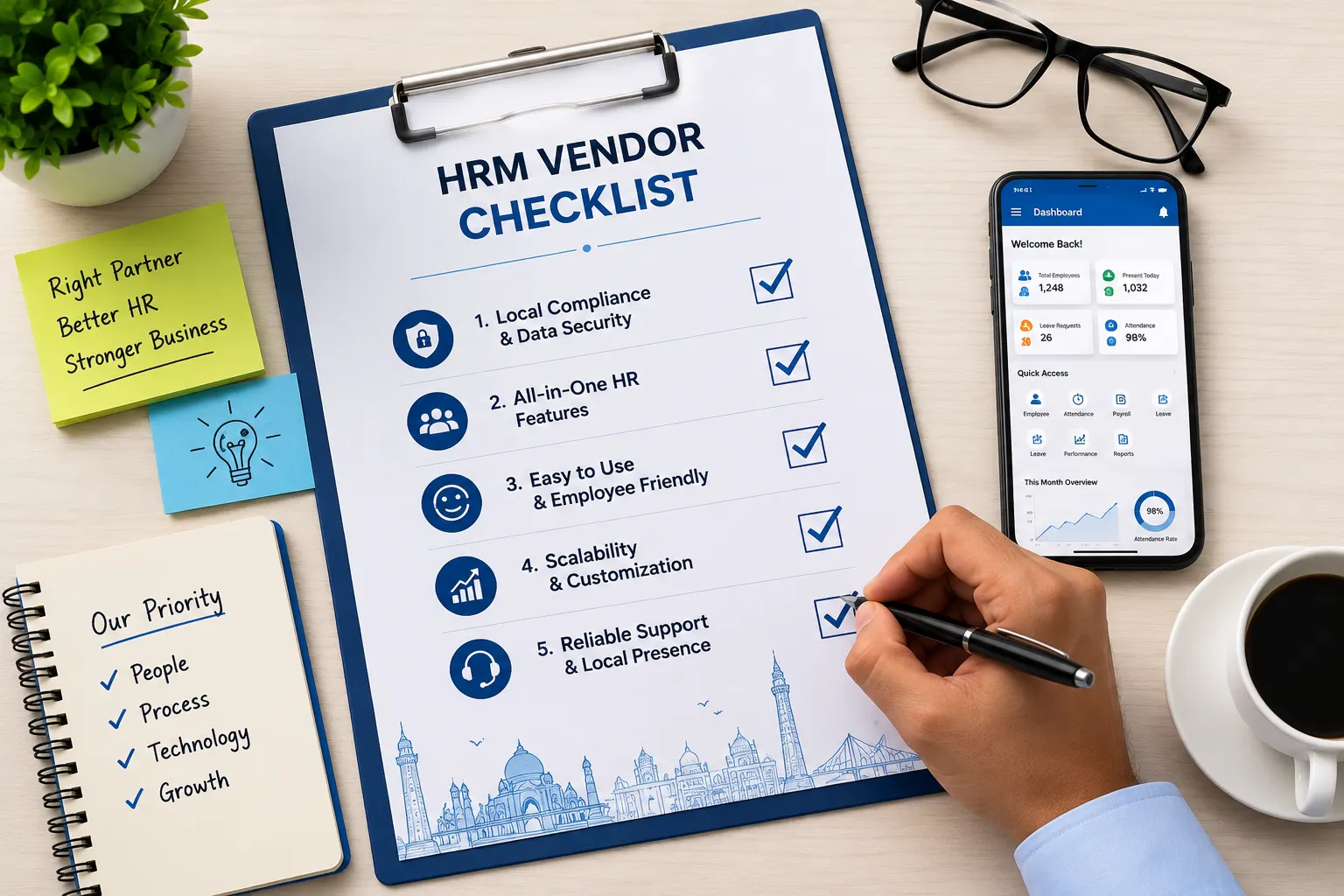
Not every platform fits every business, and picking the wrong one can be expensive to undo later.
Questions to Ask Before You Buy
Before signing a contract, it is worth pausing on a few practical questions.
Does the platform scale with your headcount, or will you outgrow it in two years
How well does it integrate with existing payroll software and accounting tools
What does the vendor's data security certification look like
Is there genuine customer support, or just a knowledge base
Does it handle local payroll rules, like NBR tax slabs and provident fund calculations, out of the box
Matching Software to Company Size
Larger enterprises tend to need more modules, often running performance appraisal, learning management, and succession planning side by side. Smaller businesses, on the other hand, often do better starting with a lean core HR management and payroll setup before adding extras.
Think about this for a moment, the right starting point really depends on where your business is today, not where you hope to be in five years.
See It in Action
You might be wondering what this actually looks like for a Bangladeshi business, day to day. Shomvob's HRIS platform brings payroll, attendance, leave management, and compliance into one system built specifically for how local companies operate, from garment factories to fast-growing startups.
If your team is still juggling spreadsheets and paper registers, it is worth seeing what a locally built HRM platform can take off your plate.
Common Mistakes Businesses Make During Implementation
But hang on, there's more to it than just picking software. Implementation is where many projects actually struggle! Here are some mistakes you might make:
Skipping proper data migration planning, which leads to messy records later
Underestimating the training time employees need to adjust
Choosing a platform based on price alone without checking long-term scalability
Failing to involve HR staff in the selection process, which hurts adoption
Ignoring integration requirements with existing finance or accounting tools
The Future of HRM Software
The pace of change in HRM software is not slowing down. AI-driven copilots embedded directly into payroll and talent workflows are becoming standard rather than a premium feature.
Enterprises are prioritizing cloud-native suites that embed generative AI copilots into payroll, talent, and learning workflows, enabling real-time analytics and reducing service-desk resolution times from days to minutes.
That shift means HR teams will likely spend even less time on tickets and manual lookups, and more time on actual workforce strategy.
Final Thoughts
Smart HRM software is no longer a luxury reserved for large enterprises with deep IT budgets. It has become a practical necessity for any business that wants accurate payroll, fewer compliance headaches, and a workforce that feels supported rather than processed through paperwork.
The numbers make the case clearly, both globally and here in Bangladesh, where millions of workers across garments, tech, and manufacturing depend on HR systems that can actually keep up.
Faster onboarding, predictive attrition models, and significant reductions in administrative workload are not theoretical benefits; they are already happening across thousands of organizations.
If your HR processes still run on spreadsheets and manual approvals, the gap between you and competitors using smart HR software platforms will only widen.
If you want to see what this looks like for your own team, take a look at Shomvob's HRIS solution and explore how it fits into your existing workflow.
Frequently Asked Questions
1. What is the difference between HRIS, HRMS, and HCM software?
HRIS focuses on storing employee data and basic administrative tasks. HRMS adds recruitment, performance, and training tools on top of that. HCM takes a broader strategic view, focusing on maximizing workforce performance and growth across the entire organization.
2. Is cloud-based HRM software secure for sensitive employee data?
Reputable vendors carry certifications such as ISO 27001 and SOC 2 Type II to protect data and meet compliance standards. It is worth confirming these certifications directly with any vendor before signing a contract.
3. How does HRM software handle Bangladeshi labor law compliance?
A platform built for the local market encodes NBR tax slabs, provident fund rules, gratuity calculations, and Bangladesh Labor Act requirements directly into its payroll engine, updating them whenever regulations change.
4. Can small businesses in Bangladesh benefit from HRM software, or is it only for large companies?
Small and medium businesses are among the fastest-growing adopters, largely because subscription pricing and self-service tools lower the barrier to entry compared to traditional enterprise software.
5. Does HRM software replace the need for an HR team?
No. It automates repetitive administrative work, but strategic decisions, employee relations, and culture building still require human judgment and oversight.