
Choosing the right HR solutions consultancy can shape your company's growth, compliance, and workforce success. This guide explores the key qualities to look for, common red flags to avoid, and practical questions to ask before selecting an HR partner in Bangladesh.
Picking the wrong HR solutions consultancy is one of those mistakes that does not announce itself immediately.
At first, things look fine. Then, slowly, the advice starts to feel generic. Payroll issues keep recurring. Compliance gaps show up during audits. And when you push back, the consultant reaches for jargon instead of answers.
It happens more than people admit, especially in a market like Bangladesh, where demand for professional HR services has grown faster than the supply of genuinely experienced providers.
Before signing any agreement, it pays to know exactly what to look for and what to walk away from.
Why Choosing the Right HR Solutions Consultancy Actually Matters
This is not just a vendor decision. A good HR solutions consultancy shapes how your people are hired, paid, developed, and retained. A bad one creates liability while appearing to be helpful.
The global HR consulting services market is projected to reach USD 46.48 billion in 2026, growing to USD 68.18 billion by 2035. That level of growth reflects genuine demand, but it also means the market is crowded with providers of varying quality. Knowing how to separate the good from the average before committing is the most valuable step you can take at this stage.
The Bangladesh Context
The HR consultancy space in Bangladesh has expanded quickly. According to Goodfirms, there are now at least 28 verified HR companies operating in Bangladesh, covering everything from executive search and payroll outsourcing to compliance advisory and training.
That number is still growing as more Bangladeshi businesses move away from managing HR entirely in-house.
More options sound like a good thing. And it can be. But a longer list of providers also means a wider range of quality, experience, and fit.
What a Good HR Solutions Consultancy Actually Does

Before evaluating options, it helps to be clear on what the right consultancy is supposed to deliver. The role goes well beyond recruitment or payroll processing.
A genuine HR solutions consultancy should help your business design HR policies that match your actual workforce, not copy-paste a template from a corporate handbook written for a different industry or country.
It should advise on compliance before problems surface, build systems that scale with headcount, and support your internal HR team rather than replace their thinking.
An HR consultant handles HR programs and projects, identifies solutions to daily HR issues, trains staff, and introduces HR technology to improve operational efficiency and reliability.
When that description sounds exactly like the person you are talking to, you are probably in the right room.
1. Local Compliance Knowledge, Not Just Global Best Practice
Here's where many businesses in Bangladesh get caught out. An HR consultancy might present impressive credentials and international frameworks.
But if they cannot speak confidently about the Bangladesh Labor Act, NBR tax slabs, provident fund calculation rules, gratuity entitlements, and festival bonus obligations, none of those credentials actually protect you.
Compliance requirements grow in complexity as your workforce expands, enters new markets, or scales operations. A consultancy that treats compliance as a checklist item rather than a living, ongoing function will leave gaps.
Ask directly. How do they track changes to local labor regulations? How quickly did they advise clients after the last national budget?
The answers reveal more than any sales brochure!
2. Industry Experience That Matches Your Sector
You might be wondering why industry experience matters so much if HR principles are fairly universal. The reason is that every sector has its own workforce dynamics, compliance layers, and people challenges.
A consultancy that has worked primarily with banks and financial institutions will approach things very differently from one with experience in garment factories, logistics companies, or fast-growing tech startups.
According to Paradigmie, one of the biggest red flags when selecting an HR consulting partner is a lack of experience in your specific industry.
Every sector carries unique regulatory requirements and workforce expectations that a generalist firm may simply not understand at the level needed to give useful advice.
Ask for sector-specific case studies, not general success stories. If they struggle to name relevant examples, that tells you something important.
3. Solutions Built Around Your Business, Not Around Their Template
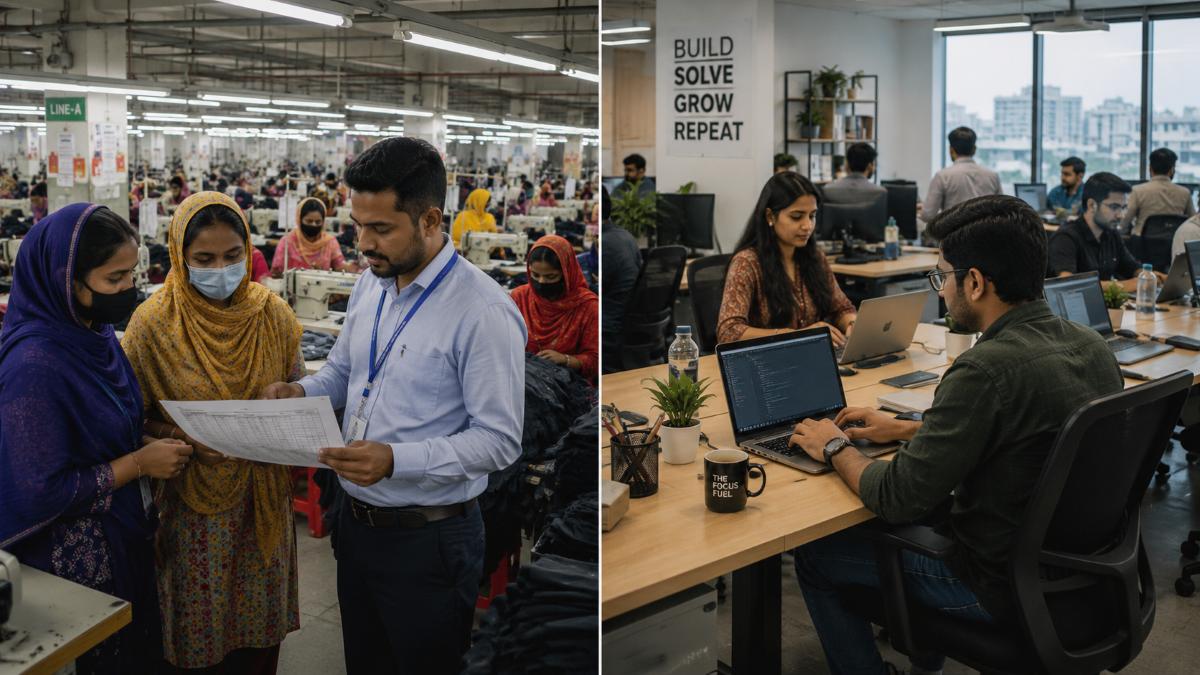
Now let's get real about something that happens more often than it should. Some HR consultancies sell a fixed service package and then work backward to fit your business into it.
The problem is that a growing Bangladeshi manufacturer and a tech startup in Dhaka have different HR needs, even though both are described as medium-sized businesses.
According to HRZone, a common and costly mistake among HR consultants is fitting the client's needs into an existing services template rather than building around what the client actually requires.
Watch out for consultants who rely on heavy HR jargon but struggle to explain what that means for your specific team and context.
What this looks like in practice during a first meeting:
They ask more questions than they make statements
They want to understand your current pain points before pitching solutions
Their proposal references specific things from your conversation, not just generic service descriptions
They are honest about what falls outside their core competency rather than claiming to do everything
4. Technology Capability and HR Software Fluency
A good HR solutions consultancy in 2026 cannot operate without a credible technology layer. According to Gartner, 70% of businesses globally are expected to adopt AI for HR operations.
Payroll processing, attendance management, recruitment pipelines, and compliance tracking are all increasingly software-driven.
If the consultancy being considered is not fluent in HR technology, cannot recommend or integrate modern HRIS platforms, and still relies primarily on manual processes, that is a capability gap worth taking seriously.
The better consultancies will either operate their own HR technology stack or partner closely with platforms that handle the digital layer. Either approach works. What does not work is a consultancy that treats software as an optional add-on rather than a core part of how HR gets done.
This is one area where Shomvob takes a different approach entirely, combining HR consultancy with a technology platform built specifically for Bangladesh's workforce, so the advice and the tools come from the same place rather than having to be stitched together separately.
5. Transparent Pricing Without Vague Retainers
This one sounds obvious, but it is worth saying clearly. Unclear pricing structures are one of the most common pain points when working with HR consultancies.
Some firms quote broadly, lock clients into long retainers, and then charge separately for every piece of additional work that comes up.
Before signing anything, get specific answers to these questions:
What is included in the monthly retainer, if applicable
What triggers additional charges outside the agreed scope
Is there a minimum contract period, and what are the exit terms
Are compliance advisory and policy drafting included or billed separately
A consultancy that cannot answer these questions cleanly up front is unlikely to become cleaner to work with later.
6. A Track Record You Can Verify
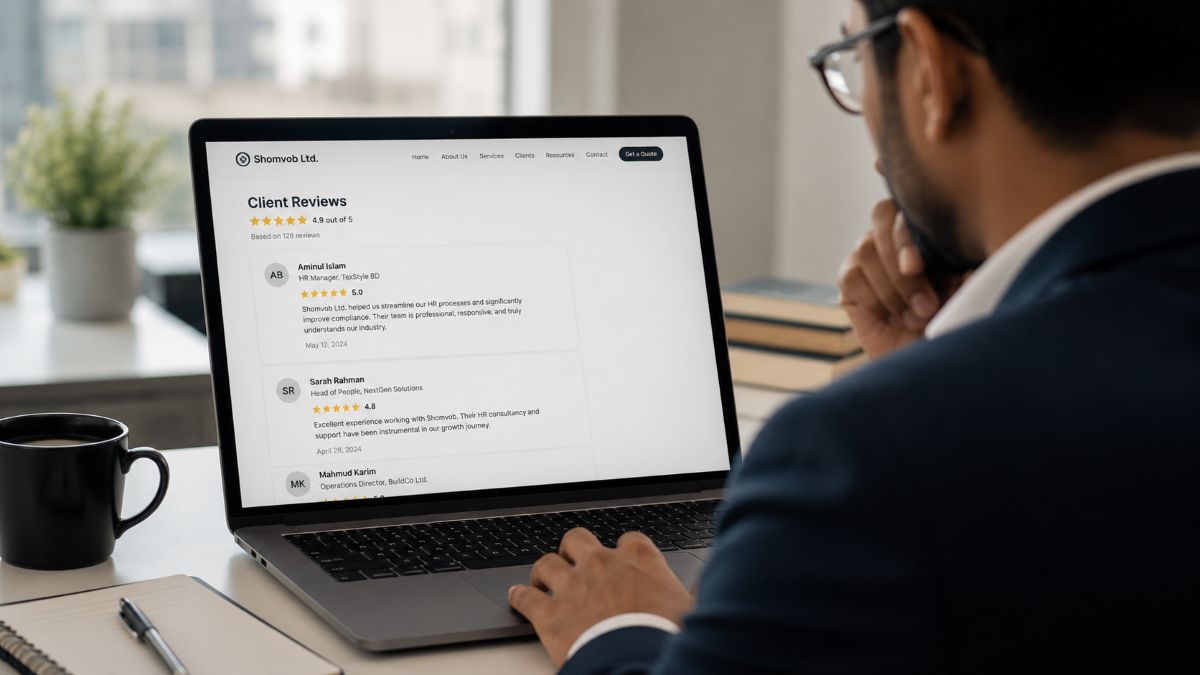
Here is something practical. Before committing to any HR solutions consultancy, check what actual clients say about them, not just what the consultancy says about itself.
According to HR Wise, 93% of consumers read reviews of local businesses to determine quality. The same logic applies when evaluating professional services. Ask for references you can actually call.
Look at what previous clients describe as both the firm's strengths and limitations.
The best consultancies are comfortable with this kind of scrutiny. The ones that deflect or only offer curated testimonials are worth looking at more carefully.
Red Flags to Watch For
Think about this for a moment, some warning signs are easy to miss in a polished initial meeting.
Red Flag | What It Usually Means |
Generic proposals with no reference to your business | They are fitting you into their template |
Avoidance of specific compliance questions | Shallow local knowledge |
No technology integration capability | Limited ability to scale with your growth |
Vague pricing or scope definitions | Disputes are likely down the line |
No verifiable references or case studies | Track record cannot be confirmed |
Agreeing with everything you say | They are not actually advising you |
That last one is worth emphasizing. A good HR consultancy will tell you when you are wrong. If the consultant across the table agrees with every decision and validates every assumption, what you have found is a yes-man, not an advisor.
What Good Looks Like in Practice
To make this more concrete, a strong HR solutions consultancy for a Bangladeshi business will typically do the following without being asked.
Review your current HR policies against Bangladesh Labor Act requirements and flag gaps
Advice on payroll structure, including NBR compliance, provident fund, and gratuity
Help you build or improve onboarding processes that work consistently across departments
Support hiring decisions with structured job frameworks and assessment criteria
Flag attrition risk patterns rather than waiting for resignation letters to arrive
Translate HR recommendations into plain language that managers can actually act on
Remember, deep expertise shows up in clear explanations, not complicated ones. Good consultants avoid drowning clients in HR jargon.
Choosing a Consultancy That Grows With You
A final thing worth considering before making a decision. Some consultancies are built to serve businesses at a specific size or stage and struggle when the relationship evolves.
If your business is growing, the consultancy needs to keep pace.
Ask what their largest current client looks like in terms of headcount and complexity. Ask how they have supported clients through significant growth phases. And ask whether their technology infrastructure scales without requiring a complete platform change when headcount doubles.
The right HR solutions consultancy is not just solving today's problems. It is setting up systems and practices that will still be working two or three years from now.
For businesses in Bangladesh seeking long-term HR support, Shomvob's HRIS platform offers a locally grounded combination of HR tools and workforce expertise that scales with the business rather than becoming a limitation.
Key Takeways
The HR solutions consultancy you choose directly influences how your people are managed, paid, and developed. That is too significant a decision to make based solely on a polished pitch deck.
Look for genuine local compliance knowledge, sector-relevant experience, honest pricing, a verifiable track record, and a technology capability that matches where your business is heading. Probe early for the things that tend to fall apart later.
And if something feels generic or evasive in the sales process, trust that instinct, because that is usually how the entire engagement goes.
Frequently Asked Questions
1. What is an HR solutions consultancy, and how is it different from an HR staffing agency?
An HR solutions consultancy advises on HR strategy, policy, compliance, and systems. A staffing agency primarily focuses on placing candidates.
Many consultancies offer both, but it is the advisory and compliance functions that set a consultancy apart from a pure recruitment business.
2. How much does an HR consultancy typically cost for a mid-sized Bangladeshi business?
Pricing varies significantly depending on scope. Some firms charge project-based fees, while others use monthly retainers.
The key is ensuring the scope is clearly defined before signing, so additional charges do not appear later for work that was assumed to be included.
3. Should a small business in Bangladesh hire an HR consultancy or invest in HR software first? For most small businesses, starting with a reliable HRIS platform handles the immediate operational needs at a lower cost.
Consultancy support becomes more valuable once the business has grown to a point where HR strategy, policy design, and compliance advisory require dedicated expertise.
4. How do you evaluate an HR consultancy's knowledge of Bangladesh Labor Act compliance?
Ask specific questions about recent regulatory changes, how they communicate budget-related updates to clients, and whether they have handled compliance matters for businesses in your sector. Vague or jargon-heavy answers to specific questions are a clear signal.
5. Can an HR consultancy help with both white-collar and blue-collar workforce management?
The best ones can. In Bangladesh's context, where many businesses manage both factory-floor and office workforces, it is important to confirm that the consultancy has experience with both types of workforce rather than specializing in only one.