
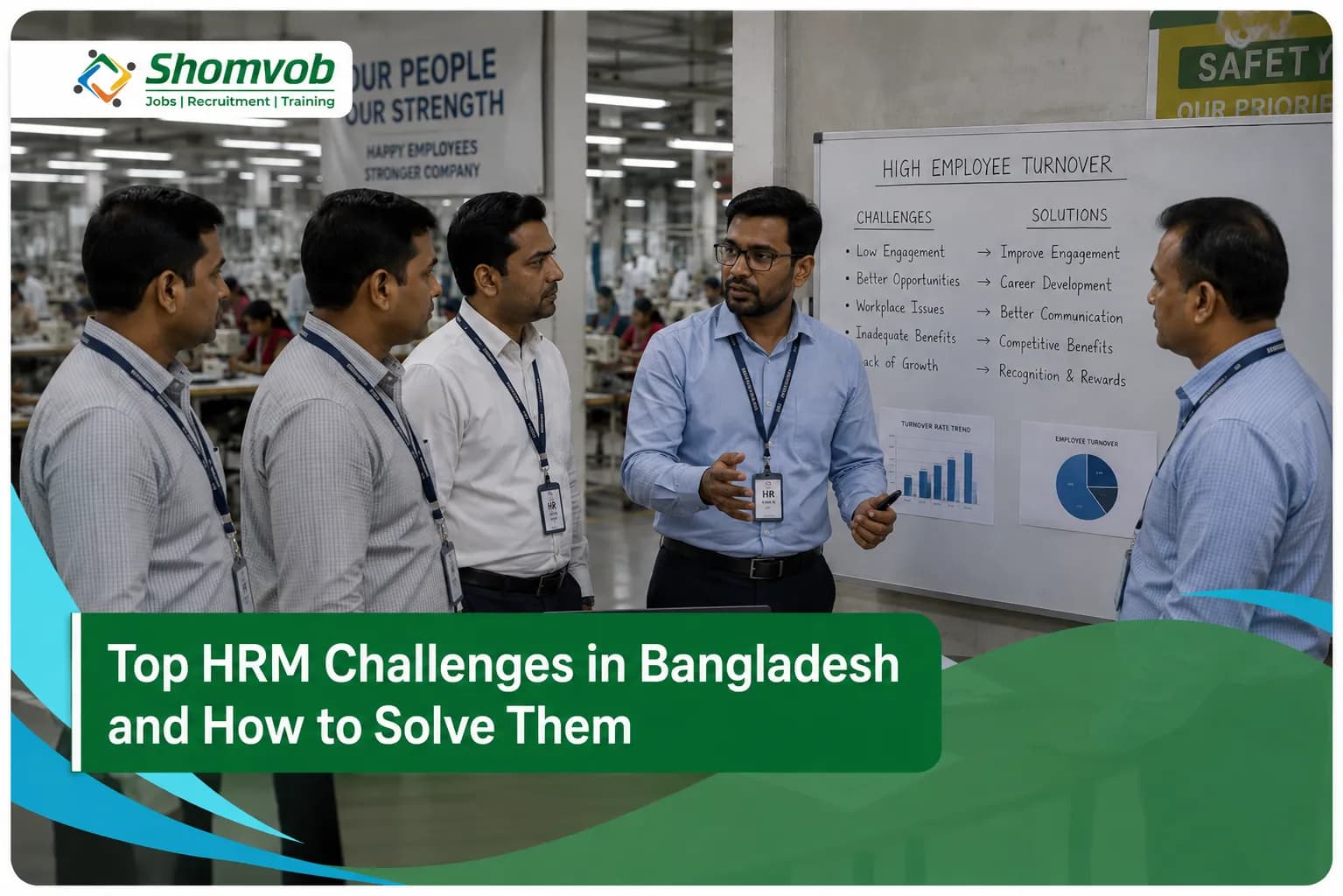
HR teams in Bangladesh face growing challenges, from skills shortages and high employee turnover to payroll errors and compliance risks. Discover six common HR challenges and practical solutions to improve workforce management, efficiency, and business performance.
If you run HR for a Bangladeshi company today, the job rarely looks like the textbook version anymore. It is not just leave requests and payslips.
There are compliance updates to track, attendance discrepancies to chase, and good people to keep from walking out the door, often all in the same week.
None of this happens in isolation, either. Across garments, tech, banking, and retail, HR teams in Bangladesh are dealing with a fairly consistent set of pressure points.
Let's break down what these challenges really look like in practice, and how you can actually fix them.
Challenge 1: A Widening Skills Gap
You might be wondering why finding the right candidate feels harder every year, even with so many graduates entering the job market. The answer lies in a mismatch between what universities teach and what employers actually need.
The Scale of the Problem
A BIDS Labor Market study projects a skilled workforce gap of around 7 million by 2025, and the pressure has not eased since. At the same time, graduate unemployment stands at 13.5%, climbing to nearly 20% for young women, according to the Labor Force Survey.
Here you end up with a strange paradox: plenty of degree holders, not enough job-ready talent.
How You Can Fix It
Hiring alone will not solve a structural skills gap. You need to build capability internally rather than waiting for the perfect candidate to apply.
Run a proper training needs analysis instead of guessing what your teams lack.
Build short, role-specific upskilling tracks rather than generic courses
Partner with technical institutes or universities for a steady talent pipeline
Use skills-based assessments during hiring instead of relying on CVs alone
Track which roles are hardest to fill and invest training budget there first
Challenge 2: High Turnover, Especially in Factory and Frontline Roles
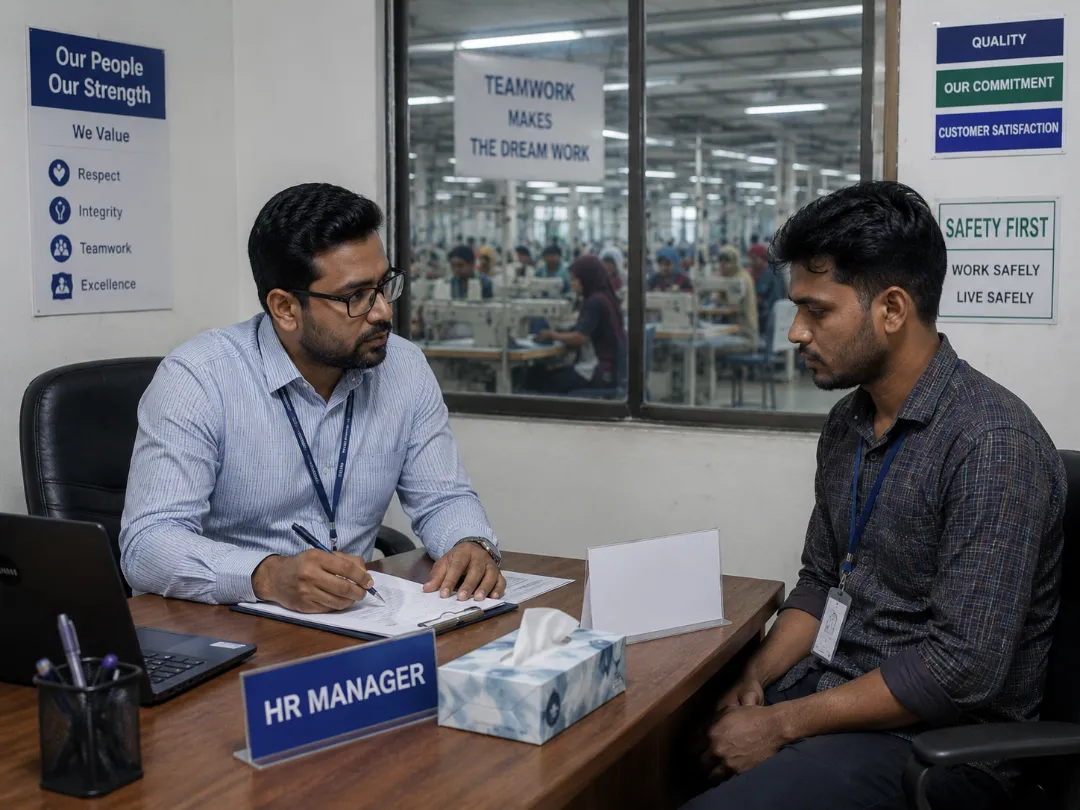
Did you know that many HR leaders assume turnover is just the cost of doing business in Bangladesh?
It is not, and the numbers show why it deserves more attention.
Why Workers Keep Leaving
The RMG sector alone has an average annual labor turnover rate of 18%, forcing factories into a constant cycle of rehiring and retraining.
Layer on top of that a broader social shift: the share of women in the garment workforce has reportedly fallen from around 80% a decade ago to closer to 60% today.
This drop is partly due to automation and partly due to working conditions pushing experienced workers out.
What Actually Helps
You cannot fix turnover with a single policy change, but a few practical moves consistently make a difference.
Retention Lever | Why It Works |
Transparent pay and bonus structures | Reduces disputes over wages and overtime |
Faster grievance resolution | Builds trust before frustration turns into resignation |
Skill-based promotion paths | Gives workers a reason to stay beyond the next paycheck |
Exit interview data tracking | Reveals patterns instead of one-off complaints |
Safer, more consistent working hours | Lowers burnout-driven attrition |
Challenge 3: Manual Payroll and Attendance Errors
But hang on, this one might be the most avoidable challenge on this entire list, and yet it is still painfully common across small and mid-sized Bangladeshi businesses.
Why Manual Systems Keep Failing You
Manual payroll relies on paper registers, handwritten attendance sheets, and spreadsheets that someone has to reconcile by hand every single month.
Mistakes in tax deductions or overtime calculations can trigger compliance issues or employee disputes, and the process only gets slower and riskier as headcount grows.
The Practical Fix
Move attendance tracking to a biometric or mobile-based clock-in
Let payroll software pull attendance data automatically instead of manual entry
Built-in automatic overtime and bonus calculations tied to actual hours worked
Generate payslips in both Bangla and English to reduce confusion
Keep a digital audit trail so disputes can be resolved with evidence, not guesswork
Challenge 4: Keeping Up With Local Compliance
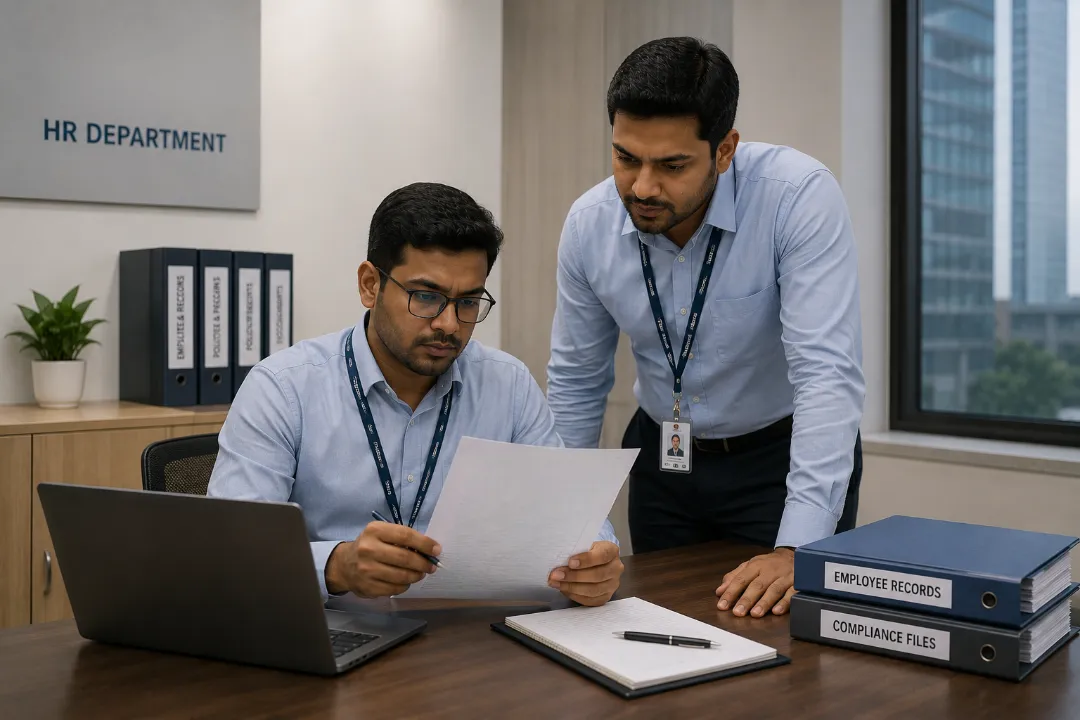
This one tends to catch people off guard, especially right after a national budget announcement forces a scramble to update payroll rules.
Compliance in Bangladesh is not static, which creates real exposure for HR teams still tracking it by hand.
Where the Risk Comes From
The Bangladesh Labor Act, NBR tax slabs, provident fund rules, and gratuity calculations all shift periodically, and RMG wages in particular saw a statutory increase requirement of around 9% in recent budget cycles.
If your payroll process is not built to absorb these changes quickly, you are exposed to penalties, back payments, and frustrated employees.
Building Compliance Into Your Process
Rather than treating compliance as an annual scramble, you can build it into your everyday HR workflow.
Choose payroll software that updates tax slabs and labor rules automatically.
Assign one person to monitor regulatory announcements year-round, not just during budget season.
Keep a compliance calendar for festival bonuses, leave encashment, and statutory deadlines.
Run periodic internal audits rather than waiting for an external audit to catch issues.
Challenge 5: Disconnected, Paper-Heavy HR Processes
Now let's talk about something less dramatic but just as costly, the everyday friction of running HR across spreadsheets, paper files, and disconnected tools. It's one of those challenges of HRM that rarely makes headlines, but quietly drains the most hours
What This Actually Costs You
For small Bangladeshi businesses, payroll alone can consume 5 to 10 hours each month, often resulting in recurring salary and attendance errors that lead directly to employee disputes.
Owners frequently lack real-time visibility into what is happening across departments, because the data lives in five different places instead of one.
Centralizing Without Overcomplicating
You do not need an enterprise-grade system on day one. What works best is something proportional to your team size, able to grow alongside it.
This is exactly the gap a locally built platform like Shomvob's HRIS is designed to close, bringing attendance, payroll, and compliance into one place without the bloat of a generic global system.
Start with core HR, attendance, and payroll before adding extra modules
Pick a platform that integrates with local banking and mobile financial services
Make sure self-service features are simple enough for non-technical staff to use
Avoid heavily customized systems that take months to implement when weeks would do
Challenge 6: Low Investment in Training and Development
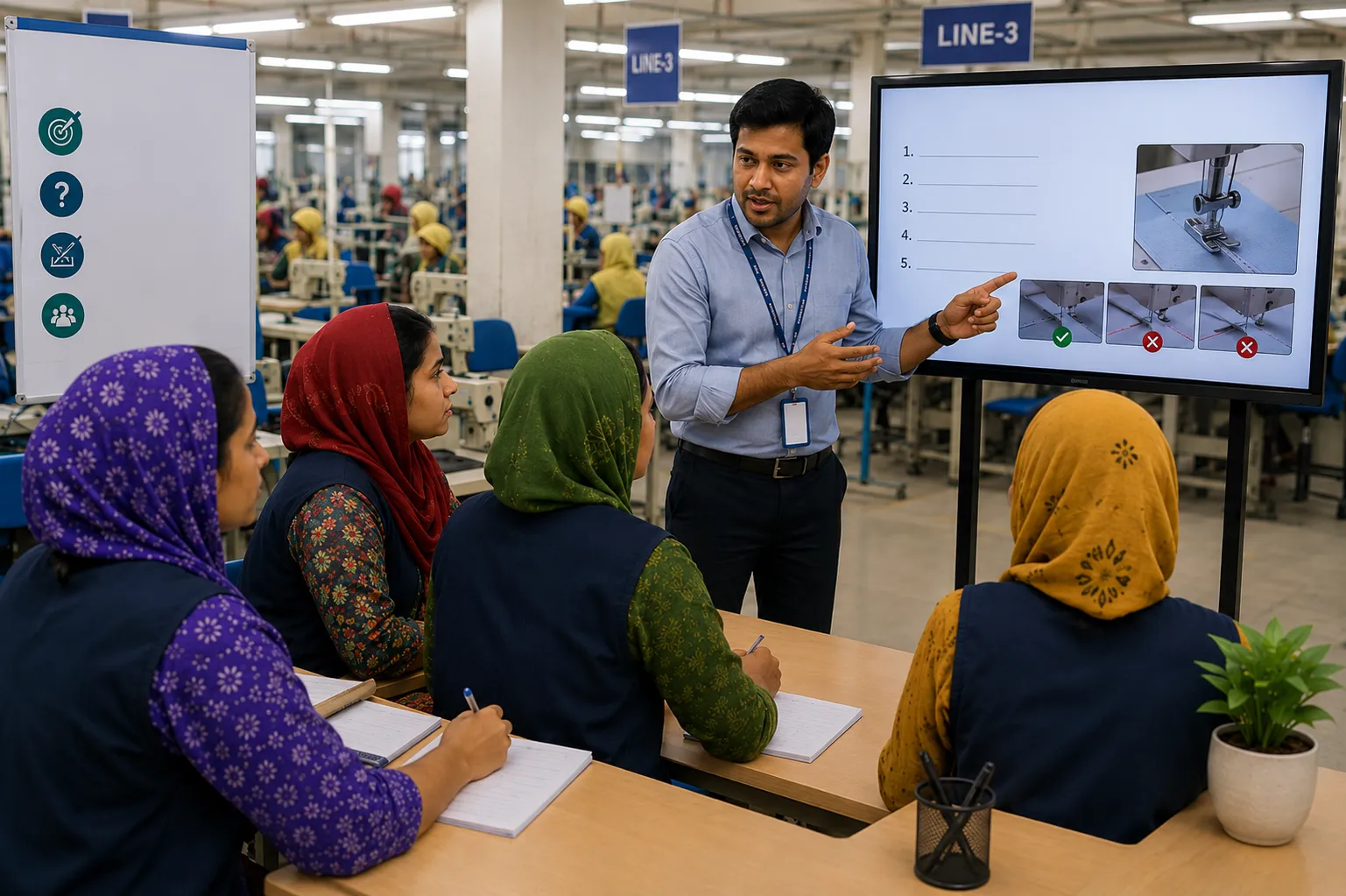
Think about this for a moment, even when companies know training matters, budget for it is often the first thing cut when times get tight.
The Numbers Tell the Story
According to BIDS research, only about 3.65% of Bangladesh's workforce receives formal training in a given year, and in sectors like RMG and construction, that figure drops below 1%.
Most mid-market employers still treat training as a cost rather than an investment, leaving capability gaps that later surface as quality issues or missed deadlines.
Making Training Stick
Tie training directly to a specific business outcome, not just attendance numbers.
Deliver content in Bangla for frontline and blue-collar roles, not only in English.
Use short, mobile-friendly modules instead of long classroom sessions
Track skill progression over time, not just completion certificates
Bringing It All Together
You will notice a pattern across all six challenges, most of which trace back to the same root cause: HR processes that were never designed to scale with the size and complexity of today's Bangladeshi workforce.
A skills gap left unaddressed becomes a retention problem. A retention problem left unmanaged becomes a payroll and compliance headache. Fixing one area tends to ease pressure on the others, too.
That is the real takeaway about the challenges of HRM in Bangladesh. They are connected, not isolated.
If your team is still managing attendance on paper or recalculating payroll by hand every month, that is the easiest place to start.
Centralizing attendance, payroll, and compliance into a single system frees up time to spend on harder problems, like retention and skills development.
This is the kind of groundwork Shomvob focuses on for Bangladeshi businesses, with HR tools built around local compliance and workforce realities rather than adapted from a generic global template.
Frequently Asked Questions
1. What is the biggest HR challenge facing Bangladeshi companies right now? Skills mismatch and high turnover tend to top the list, especially in manufacturing and frontline roles, though manual payroll errors remain a close third for smaller businesses.
2. How can small businesses in Bangladesh afford proper HR systems?
Most cloud-based HR platforms in Bangladesh use a low-per-employee subscription model, which is significantly cheaper than outsourcing payroll or incurring compliance penalties for manual errors.
3. Why is employee turnover so high in the garment sector specifically?
A combination of wage pressure, long working hours, and limited career progression drives much of the turnover, along with broader shifts in who is willing to take frontline factory roles.
4. Does digitizing HR processes really reduce compliance risk?
Yes. Automated systems that update tax slabs and labor rules in real time significantly cut the chances of manual errors that lead to penalties or back payments.
5. How can companies close the skills gap without a large training budget? Short, targeted, role-specific training delivered in Bangla tends to be more cost-effective than broad generic courses, and it can be rolled out gradually rather than all at once.